



When it comes to industrial applications, Steel Bushings play a vital role in ensuring durability and the seamless operation of machinery. One question often asked is how the process of hardening improves bushings.
This blog will explore how bushings are hardened, why the process is necessary, and what factors influence the quality and performance of hardened steel sleeve bushings. By the end, you’ll have a clear understanding of why hardening is crucial and how it can enhance the lifespan of these essential components.
How Do You Harden Bushings?
Bushings, especially those made from steel, are subjected to various hardening processes to improve their durability and resistance to wear. But what does this involve? The hardening of bushings usually begins with the selection of the right grade of steel. Following this, the steel undergoes a heat treatment process that alters its physical and mechanical properties.
The heat treatment process typically involves:
- Heating: The bushing is exposed to a specific high temperature based on the type of steel used.
- Quenching: After heating, the bushing is rapidly cooled using a quenching medium like oil, water, or air.
- Tempering: To reduce brittleness and enhance toughness, the steel is reheated to a lower temperature and then cooled again.
These steps significantly strengthen the hardened steel sleeve bushings, ensuring they perform optimally under high stress and harsh operating conditions.
How Do You Harden Bearing Steel?
Bearing steel is most likely to be hardened after being formed and machined into the desired bearing shape and dimensions while it is still in a relatively soft (unhardened) state, making it easier to cut and shape precisely. The bearing components are subjected to heat treatment after they have been machined to near-final dimensions.
Here’s how it’s typically hardened:
- Carburization: This process adds carbon to the surface of the steel to improve its hardness and wear resistance.
- Induction Hardening: This method involves heating the surface of the bearing steel by electromagnetic induction, then quenching it rapidly. This creates a hardened exterior while maintaining a tough inner core.
- Cryogenic Treatment: Sometimes, the steel is cooled to sub-zero temperatures to relieve residual stress and enhance its structural integrity.
By following these steps, manufacturers ensure that bearing steel provides the longevity and reliability needed for crucial applications, such as used in Steel Bushing.
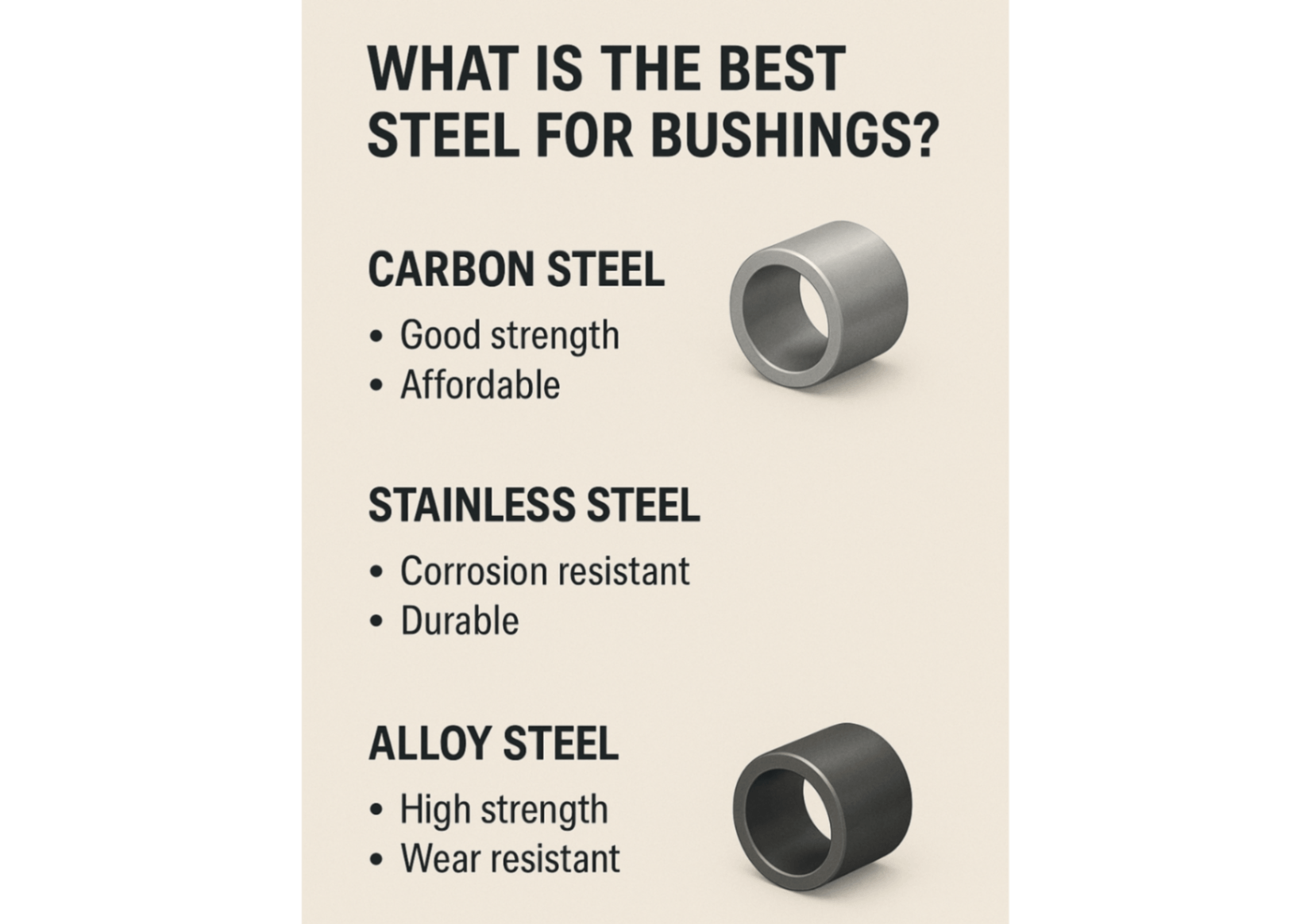
What Is the Best Steel for Bushings?
The choice of steel greatly influences a bushing’s performance and durability. Commonly used materials include:
- Carbon Steel: Known for its balance between strength and affordability, carbon steel works well for general applications.
- Stainless Steel: This is a preferred choice for environments prone to corrosion, offering both durability and rust resistance.
- Alloy Steel: With enhanced mechanical properties, alloy steel is ideal for high-stress, high-wear applications.
For the best results, many opt for hardened steel, particularly variants that have undergone meticulous heat treatments. Hardened steel sleeve bushings crafted from these materials can withstand extreme conditions, making them perfect for heavy-duty machinery in industrial settings.
What Is the Best Lubricant for Dry Bushings?
Lubrication is a critical factor in the performance of any bushing. For dry bushings – also known as self-lubricating bushings – the type of lubricant used must reduce friction and resist wear without requiring frequent re-application:
- Graphite-Based Lubricants: These are excellent for high-temperature applications as graphite can withstand heat while maintaining low friction levels.
- Oil-Impregnated Lubricants: A popular choice for dry bushings, these lubricants are infused into the bushing material itself, providing consistent lubrication over time.
- Molybdenum Disulfide: This is a solid lubricant suited for extreme pressure applications while offering prolonged protection.
When used in conjunction with Steel Bushing systems, the proper lubricant extends the life of the parts and ensures smoother operation. Selecting the right type also depends on the operational environment, so understanding needs is crucial for optimum performance.
Best Lubricant for Metal Bushings
While the above covers dry bushings specifically, it’s worth noting that for standard metal bushings, traditional lubricants such as high-performance oils and greases are often used. These products create a protective film between the bushing and its mating surface, reducing both friction and wear.
When selecting a lubricant, consider the following factors:
- Viscosity: Higher viscosity lubricants work better for heavy load applications.
- Temperature Tolerance: Ensure the lubricant can handle the thermal conditions of your application.
- Compatibility: Always check that the lubricant is chemical-compatible with the bushing material.
Conclusion
Hardening bushings through heat treatment processes like quenching, tempering, or carburization enhances their resistance to wear, extending their lifespan across various applications. From choosing the right steel type to understanding the lubrication needs of bushings, every step contributes to creating durable and reliable machinery components.
For industries relying on heavy-duty machinery, hardened steel sleeve bushings are a game-changer, offering unmatched longevity and performance. If your next project demands bushings that can withstand extreme wear and tear, consider exploring hardened steel options.
Explore our range of high-quality steel bushings specifically designed for industrial use. Contact our team today to learn more and find the ideal solution for your needs!
Frequently Asked Questions
What is the process for hardening bushings at SC Industries, Inc.?
At SC Industries, Inc., we employ a meticulous heat treatment method to harden bushings, ensuring superior performance. Our process includes:
- Gradual heating to predetermined temperatures, followed by quenching to achieve the desired hardness.
- Our state-of-the-art facilities enable us to conduct rigorous quality checks throughout the process, maintaining compliance with standards.
- We consistently achieve tight tolerances, guaranteeing that your components meet precise specifications.
How do you ensure the quality of hardened bushings?
Quality assurance is critical at SC Industries, Inc. We ensure the quality of our hardened bushings through:
- A commitment to industry best practices that promote reliability and performance.
- Advanced testing methods, including non-destructive testing and material analysis, specifically tailored to our precision components to ensure durability and precision.
- Regular training and development programs for our staff focused on our in-house multi-axis CNC and grinding processes, enhancing skills to maintain our low defect rates and tight tolerances.
Can you customize the hardness level of bushings?
Yes, SC Industries, Inc. offers customization of hardness levels based on your specific requirements. Our capabilities include:
- Adjusting the heat treatment process to meet precise hardness specifications for various applications, which is essential in the process of how you harden bushings.
- Engaging in detailed discussions with clients to identify the best performance criteria.
- Employing state-of-the-art equipment to ensure the production of high-quality, tailored hardened bushings.
What types of materials do you use for hardening bushings?
At SC Industries, Inc., we utilize a range of materials for hardening bushings, including:
- Advanced alloys that offer enhanced wear resistance and durability, which are crucial when hardening bushings to withstand operational stress.
- Specialty composites tailored for specific operational environments and loads.
- Our experienced engineering team collaborates with clients to identify the optimal material for their unique applications. To harden bushings, we employ heat treatment processes that enhance the material's strength and wear resistance, ensuring they meet the stringent demands of heavy-duty applications.
How does your oil-grooving process work for hardened bushings?
SC Industries, Inc. employs a precise oil-grooving process for hardened bushings that involves several key steps:
- We begin by analyzing the specific lubrication needs of your application to determine the optimal groove configuration.
- Our advanced CNC machinery then creates tailored oil grooves, such as figure‑8 or spiral patterns, directly into the bushing during production.
- This integration enhances lubrication distribution and thermal management, ensuring that the hardened bushings perform optimally and have an extended service life.
What industries benefit from your hardened bushings?
SC Industries, Inc. provides hardened bushings for various industries, including:
- Heavy-duty industrial applications where resilience and precision are paramount, achieved through our specific hardening processes.
- OEM applications that demand high-performance components with exacting specifications, supported by our ISO 9001:2015 certified quality system.
- Our commitment to quality enables us to support a wide range of sectors such as construction, energy, and transportation equipment manufacturing, utilizing our specialized oil-grooving techniques for custom configurations.
How quickly can you produce hardened bushings?
SC Industries, Inc. can typically produce hardened bushings within weeks, depending on the complexity and volume of your order. We utilize advanced manufacturing techniques and state-of-the-art equipment to ensure precision in hardening. Our experienced teams work diligently to optimize workflows, minimizing lead times while adhering to your project timelines.
What is the importance of tight tolerances in hardened bushings?
Tight tolerances are essential for the optimal function of hardened bushings. At SC Industries, Inc., we focus on:
- Minimizing wear and tear, which contributes to reduced maintenance costs over time.
- Achieving precision tolerances to satisfy rigorous quality standards.
- Improving performance consistency in demanding environments, vital for ensuring safety and productivity in operations. These tight tolerances are crucial when hardening bushings because they ensure a proper fit, which directly impacts the longevity and reliability of the components in heavy-duty applications.