Posted by on | Comments Off on What is Through-Feed Grinding?
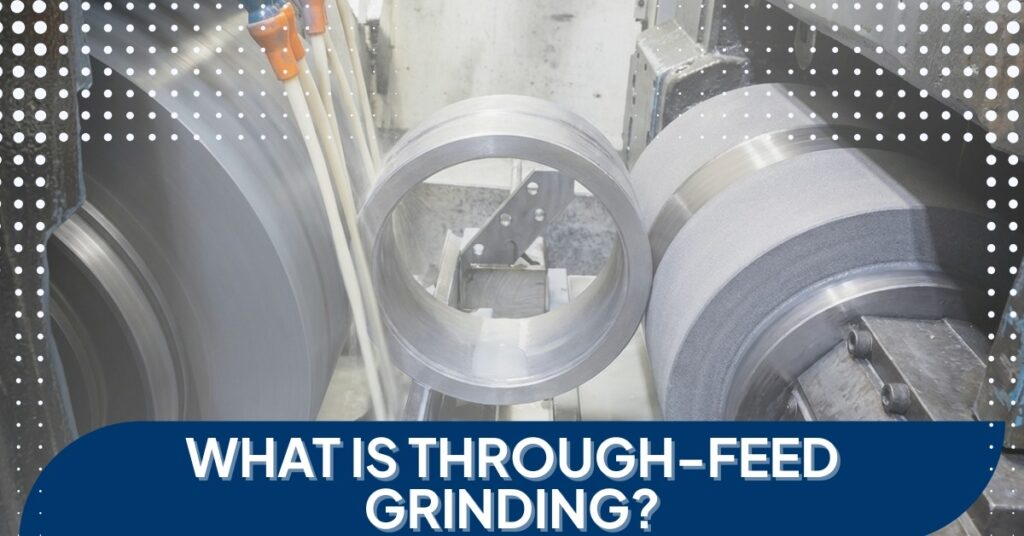
Through-feed grinding is a specialized machining technique used primarily in the manufacturing of precision cylindrical components. This method allows for the efficient processing of long, cylindrical parts, enhancing productivity while ensuring tight tolerances and superior surface finishes.
In this article, we will delve into the intricacies of through-feed grinding, its applications, and its significance in the realm of precision machining. Additionally, we will explore related concepts such as surface grinding and safety considerations when using cutting wheels.
Because this process connects directly with key surface-grinding fundamentals, it helps establish the level of flatness, uniformity, and repeatable accuracy required across industries like aerospace, automotive, and heavy equipment manufacturing.
What is the primary purpose of surface grinding?
The primary purpose of surface grinding is to achieve a high degree of flatness and finish on a workpiece. This process is essential in manufacturing, as it contributes significantly to the overall precision and quality of machined components.
The main objectives of surface grinding include:
Achieving Flatness: Ensuring that the workpiece has a uniform surface, which is crucial for parts that must fit together accurately.
Improving Finish Quality: Surface grinding enhances the aesthetic and functional characteristics of components by providing a smooth, polished finish.
In the context of through-feed grinding, surface grinding plays a pivotal role in ensuring that the machined parts meet the exacting standards required by industries such as aerospace, automotive, and heavy equipment manufacturing. SC Industries, Inc. leverages over 75 years of experience in producing precision hardened metal components, ensuring that every part manufactured through this process adheres to stringent quality standards.
What are the various types of surface grinding approaches that are possible?
There are several methods of surface grinding, each tailored to specific applications and workpiece geometries. Key approaches include:
Flat Grinding: This method focuses on producing flat surfaces on rectangular or square components.
Cylindrical Grinding: This technique is used for grinding cylindrical parts, ensuring uniformity in diameter and surface finish.
Among these methods, centerless grinding stands out as a specialized grinding process that supports through-feed operations by eliminating the need for workholding. This approach is particularly advantageous for through-feed grinding, as it allows for continuous operation and increased throughput. SC Industries, Inc. employs multi-axis CNC and centerless grinding capabilities to achieve extremely tight tolerances as low as ±0.0004″ or ±0.0005″, providing clients with high-quality components that meet demanding specifications.
Is it safe to grind with a cutting wheel?
When utilizing cutting wheels in grinding applications, safety is paramount. Proper precautions must be taken to mitigate potential risks. Key safety considerations include:
Personal Protective Equipment (PPE): Always wear appropriate PPE, including safety glasses, gloves, and hearing protection.
Wheel Inspection: Regularly inspect cutting wheels for signs of wear or damage before use.
Proper Setup: Ensure that the grinding machine is configured correctly and that all components—wheel guards, rests, and fixtures—are secure.
Best practices for safe operation include:
Maintaining a clean work environment to prevent accidents.
Following the manufacturer’s guidelines for wheel speed and feed rates.
Being aware of the machine’s safety features and emergency shut-off mechanisms.
What type of grinding wheel is best for aluminum?
When grinding aluminum, selecting the right grinding wheel is crucial for achieving optimal results. A Silicon Carbide grinding wheel is often recommended for aluminum because its abrasive structure cuts effectively without excessive loading.
Key advantages of using a Silicon Carbide grinding wheel for aluminum include:
Effective Material Removal: Silicon Carbide is highly effective in cutting through aluminum, allowing for efficient material removal.
Reduced Loading: These wheels minimize loading, which can occur when softer materials clog the wheel surface, thus maintaining cutting efficiency.
Using the appropriate grinding wheel not only enhances the quality of the finished product, but also extends the life of the grinding equipment.
Conclusion
Through-feed grinding is an essential technique in the precision machining landscape, offering significant advantages in terms of efficiency and accuracy. Understanding the various aspects of this process, including its relationship with surface grinding and safety protocols, is vital for manufacturers aiming to produce high-quality components.
For those looking to elevate their machining processes, SC Industries, Inc. provides a comprehensive range of solutions in hardened and ground bushings, bearings, and other precision components. With our ISO 9001:2015 certified quality system and a commitment to low defect rates, we ensure that every component meets the highest standards of quality and performance.
Ready to enhance your manufacturing capabilities? Discover how our precision grinding services can transform your production processes. Explore our offerings at SC Industries, Inc. or contact our engineering team to discuss your specific requirements.
Posted by on | Comments Off on What is the difference between plunge cut grinding and through-feed grinding?
In the precision machining industry, understanding the nuances of various grinding technique options is essential for optimizing production processes. Two prominent methods, plunge cut grinding (also known as in-feed grinding), and through-feed grinding, serve distinct purposes and applications.
This article delves into the differences between these two grinding techniques, exploring their methodologies, advantages, and ideal use cases. By the end, you will have a clearer understanding of how to choose the right grinding method for your specific manufacturing needs.
What are the different types of grinding?
Grinding encompasses a range of techniques designed to achieve precise surface finishes and dimensional tolerances. Among types of grinding wheel, plunge cut grinding and through-feed grinding are particularly noteworthy:
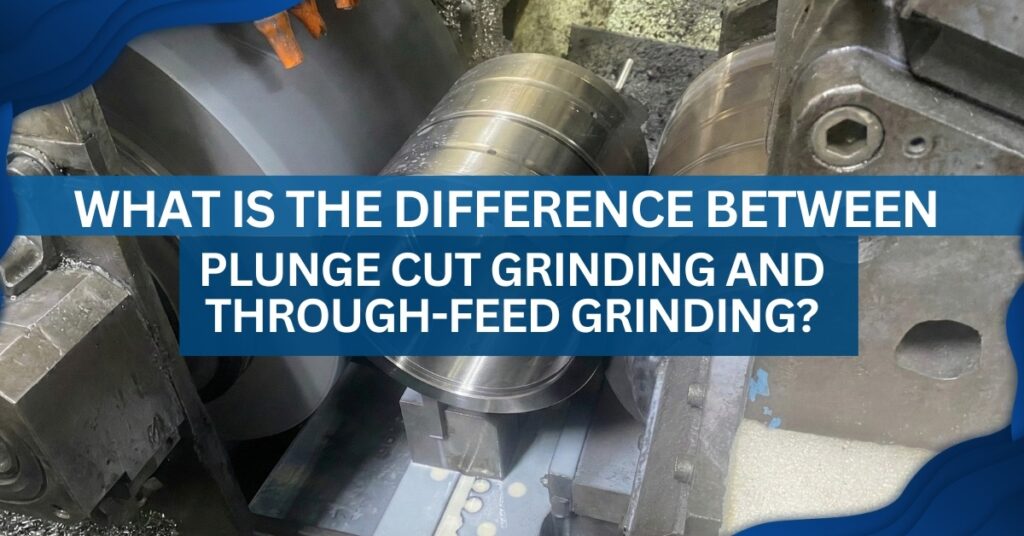
Plunge Cut Grinding: This method, also known as in-feed grinding, involves the grinding wheel moving vertically down into the workpiece. It is typically used for creating flat surfaces or specific profiles, and is advantageous when working with irregular shapes or when high precision is required. It is particularly beneficial for parts that demand extremely tight tolerances.
Through-Feed Grinding: In contrast, through-feed grinding allows the workpiece to be fed continuously through the grinding wheel. It is often employed for high-volume production of cylindrical parts, as it enhances efficiency and reduces cycle times. The ability to produce components with consistent micro-finishes makes this method ideal for applications requiring uniformity.
Both techniques have their unique applications in manufacturing, making them valuable tools in the precision machining arsenal.
What is the method of surface grinding?
Surface grinding is a common method used to achieve a smooth surface on a workpiece. The process involves a rotating grinding wheel that moves across the workpiece, removing material to create a smooth finish. Consulting a grinding wheel specification chart is essential for selecting the appropriate wheel for your surface grinding application.
When comparing surface grinding with plunge cut and through-feed grinding, key distinctions emerge:
Plunge Cut Grinding: Offers more versatility in shaping and is used for creating specific profiles or contours.
Through-Feed Grinding: Emphasizes efficiency and is best suited for high-volume production runs.
Understanding these differences is crucial for selection of the appropriate method based on the desired outcome.
What is the difference between centerless grinding and OD grinding?
Centerless grinding and OD (Outside Diameter) grinding are two other methods prevalent in the machining industry.
Centerless Grinding: This method allows for grinding of cylindrical parts without the need for a spindle. The workpiece is supported by a regulating wheel and a grinding wheel, enabling high-speed production and achievement of precise tolerances. Centerless grinding is particularly advantageous for long, slender parts, and offers several benefits, including reduced setup times and enhanced throughput.
OD Grinding: In contrast, OD grinding involves mounting the workpiece on a spindle and rotating it against a stationary grinding wheel.
Both methods have distinct applications and advantages, making them integral to particular manufacturing processes. A universal grinding wheel can often be utilized in centerless grinding applications, providing versatility in your grinding operations.
Which is the best grinding wheel?
Selecting the right grinding wheel is critical for achieving optimal results in any grinding operation. Factors to consider include:
Material: The type of material being machined influences the choice of grinding wheel.
Specifications: Refer to a grinding wheel specification chart to understand the grit size, hardness, and bonding agent necessary for your specific application.
Application: Different grinding wheels are suited for various tasks, such as plunge cut grinding or through-feed grinding.
A thorough understanding of these factors will help you choose the most effective grinding wheel for your needs.
How does through-feed grinding process work?
The through-feed grinding process is designed for efficiency, particularly in high-volume production settings. Here’s a step-by-step explanation:
Loading: The workpiece is placed on a conveyor system.
Feeding: The workpiece is fed continuously through the grinding wheel.
Grinding: As the workpiece passes through, the grinding wheel removes material, achieving the desired dimensions and surface finish.
Unloading: The finished part exits the other side of the machine.
Benefits and Limitations of Through-Feed Grinding
Benefits:
High throughput and efficiency.
Consistent surface finishes on cylindrical parts.
Limitations:
Not suitable for irregularly shaped components.
Requires precise alignment for optimal results.
Understanding the through-feed grinding process can significantly enhance production efficiency in suitable applications.
What are the differences between plunge cut grinding and through-feed grinding?
The differences between plunge cut (in-feed) grinding and through-feed grinding can be summarized as follows:
Methodology:
Plunge Cut Grinding: Involves vertical motion of the grinding wheel, ideal for creating specific profiles and contours.
Through-Feed Grinding: Utilizes a continuous feeding mechanism for cylindrical parts, enhancing efficiency.
Applications:
Plunge Cut Grinding: Best for irregular shapes and high-precision work, particularly in producing components that require precision and rigorous metrology.
Through-Feed Grinding: Suited for high-volume production of cylindrical components, ensuring consistent quality and performance.
Each method may require different materials and grinding wheels, impacting the choice based on the workpiece specifications. By understanding these distinctions, manufacturers can make informed decisions on which grinding technique to employ based on their specific requirements.
Ready to enhance your machining processes with precision-engineered components? Explore our range of hardened and ground bushings, bearings, and other machined components tailored for heavy-duty applications. Discover how SC Industries and our multi-axis CNC capabilities can transform your manufacturing efficiency. Visit our pageto learn more about our solutions for meeting your exacting standards!
Posted by on | Comments Off on What are the advantages of centerless grinding over centre type grinding?
In the precision machining sector, the choice of grinding method can meaningfully impact production efficiency and part quality. Among the various techniques available, centerless grinding has emerged as a preferred option for many manufacturers. Understanding the advantages of centerless grinding over traditional center-type grinding can help decision-makers select the most suitable approach for their specific needs.
In this article, we will explore the fundamental principles of centerless grinding, compare it to cylindrical grinding, and explain the advantages and limitations of this method.
What is centerless grinding?
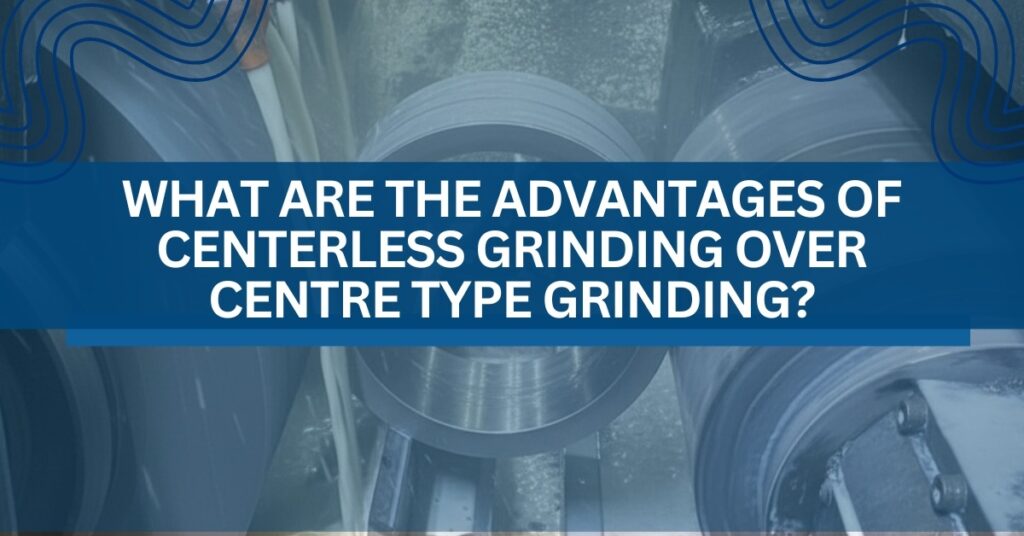
Centerless grinding is a machining process that uses abrasive cutting to remove material from a workpiece. Unlike traditional methods where the workpiece is held between two centers, centerless grinding supports the workpiece using a grinding wheel and a regulating wheel. This setup enables continuous grinding without additional workholding or frequent re-centering.
Through-feed grinding: This method is ideal for cylindrical parts that are fed through the machine and ground continuously.
In-feed grinding: Used for parts with complex shapes or geometries, in-feed grinding allows for the part to be placed in the machine and ground at specific angles.
These machines are widely used in applications ranging from automotive to aerospace, showcasing their versatility in precision machining.
What is the difference between centerless grinding and cylindrical grinding?
The fundamental difference between centerless grinding and cylindrical grinding lies in how the workpiece is held. In cylindrical grinding, the workpiece is mounted between two centers, while centerless grinding relies on external support from the grinding wheel and regulating wheel.
Advantages of each method
Centerless grinding:
Higher production rates due to continuous operation.
No need for complex setups or fixtures.
Better suited for high-volume production runs.
Cylindrical grinding:
More efficient for parts requiring tight tolerances and intricate shapes.
Allows for more control over the grinding process.
Both methods offer distinct advantages, making each suitable for different part geometries and tolerance requirements.
What are the advantages and disadvantages of centerless grinding?
Centerless grinding offers several key advantages over traditional grinding methods, including:
Increased efficiency: Continuous grinding allows for exceptionally high production rates without the need for part re-clamping. Centerless grinders can process up to 200–300 parts per minute, depending on the size of the part. (centerlesstech.com)
Reduced setup time: Centerless grinding requires minimal setup, making it easier to switch between different workpieces. The absence of centering reduces stock requirements, leading to longer wheel life and higher yields. (xometry.com)
Consistency and precision: This method provides high levels of accuracy and repeatability, essential for precision machining. Centerless grinding can achieve tolerances as tight as ±0.0001 inches (±0.0025 mm), which is critical for automotive components where exact measurements are essential for performance and reliability. (wisconsinmetaltech.com)
However, it is essential to understand what are the disadvantages of centerless grinding as well.
What are the disadvantages of centerless grinding?
While centerless grinding has many advantages, it also presents specific limitations and challenges:
Limited part shapes: Not all geometries can be efficiently ground using centerless methods.
Workpiece size constraints: The dimensions of the workpiece must fall within specific limits to ensure proper grinding.
Skill requirements: Operators must be trained to handle the unique setup and operational characteristics of centerless grinding.
Understanding these limitations can help manufacturers determine when centerless grinding is the best choice. Additionally, exploring what are the disadvantages of centerless grinding can provide further insights into its potential drawbacks.
Which of the following grinding processes is used for high production run?
Centerless grinding is particularly well-suited for high production runs due to its cost-efficiency. The continuous nature of the process allows for the rapid production of parts, which can provide significant savings in both time and labor costs. This makes it a popular choice for industries that require large quantities of precision components.
Centerless grinding machine parts and their functions
A centerless grinding machine comprises several key components, each contributing to the grinding process:
Grinding wheel: The primary tool that performs the cutting action.
Regulating wheel: Controls the speed and feed rate of the workpiece.
Work rest blade: Provides support for the workpiece during grinding.
Understanding these machine components is critical for optimizing setup, improving part quality, and maximizing grinding efficiency. Additionally, advancements in grinding wheel technology have led to the development of wheels that enhance performance and extend tool life, further improving the efficiency of centerless grinding operations.
Advanced considerations in centerless grinding
As technology evolves, so do the methods and machines used in centerless grinding. Future trends may include:
Automation: Increasingly, manufacturers are integrating automation to enhance efficiency and reduce labor costs. Automated grinding machines work at a constant speed, with higher precision and accuracy, leading to increased production capacity.
Innovative materials: The development of advanced grinding wheels and machine components is improving performance and durability.
Also, the integration of motion control devices in centerless grinding machines allows for more precise adjustments and improved consistency in the grinding process. This technology substantially enhances the quality of finished parts, making it an essential consideration for manufacturers looking to optimize their operations.
When considering an investment in centerless grinding, factors such as the cost of small centerless grinding machines and the potential return on investment should be evaluated carefully.
Conclusion
Centerless grinding offers numerous advantages over traditional center-type grinding, particularly in terms of efficiency, setup time, and precision. While it is an excellent choice for high-volume production runs, manufacturers must also weigh its limitations in accordance with their specific needs. By understanding both the benefits and challenges of centerless grinding, decision-makers can make informed choices that enhance their machining processes and overall productivity.
Ready to dive deeper into the centerless grinding industry? Request a quote and gain expert insights, tips, and knowledge of the latest industry trends to elevate your machining processes. Join our community and stay ahead of the curve!
Posted by on | Comments Off on What is the difference between infeed and through-feed grinding?
In precision machining, understanding grinding techniques is essential for optimizing manufacturing processes and achieving superior component quality. Infeed and through-feed grinding are two fundamental centerless grinding methods, each suited to specific part geometries and production requirements.
This high-productivity finishing technology generates precision parts by supporting the workpiece without fixed clamping points, drastically reducing production time and improving size accuracy. The core difference lies in the direction and movement of the workpiece, which determines the geometry of the final part. For a broader understanding of the Types of centerless grinding, refer to our Centerless grinding page.
What is feed grinding?
Feed grinding refers to operational modes within centerless grinding—primarily through-feed and in-feed (plunge)—that define how the workpiece interacts with the grinding wheel and regulating wheel for material removal. This process achieves precise dimensions and surface finishes while eliminating clamping and centering operations, helping to lower cycle times.
Applications requiring symmetrical construction or continuous production of parallel cylindrical components, such as long bars, pins, cylindrical rollers, and shafts primarily comprise what through feed grinding is used for. This method allows continuous grinding of multiple parts, enhancing productivity and efficiency for high-volume production runs.
Typical materials processed include metals such as steel, aluminum, and titanium, plastics for lightweight components, and ceramics for high wear resistance applications.
What is the difference between infeed and through-feed?
Through-Feed Grinding
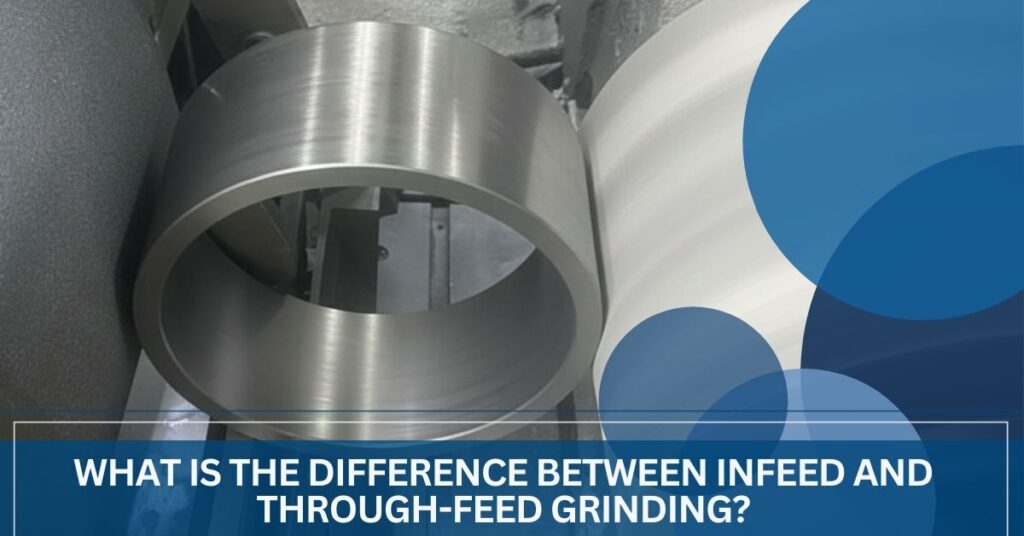
In through-feed grinding, the workpiece is continuously axially positioned between the grinding and regulating wheels, producing a consistent cylindrical shape along its entire length, resulting in a cylindrical shape along its entire length. Advanced technology enables production of precision rollers with roundness accuracy of 0.1–0.3 µm at throughput of 250–350 pieces per minute.
Advantages: Higher production rates, minimal setup time for identical parts, ideal for high-volume production of uniform diameter parts.
Disadvantages: Limited to consistent diameters and symmetrical shapes, less flexibility for complex geometries.
Infeed grinding (plunge grinding) involves positioning the workpiece in a fixed axial location while the grinding wheel is fed radially to achieve the final profile. The workpiece is held in a fixed axial position during the process.
Advantages: Greater flexibility in part shapes, ability to achieve tight tolerances and complex profiles, ideal for intricate designs with shoulders or projected surfaces.
Disadvantages: Slower production rates, more setup time required for each configuration.
Applications: Ideal for bushings and bearings. SC Industries manufactures hardened and ground bushings and bearings with tolerances as tight as ±0.0004″ or ±0.0005″.
What is the unit of grinding feed rate?
The grinding feed rate refers to the controlled speed at which the workpiece or grinding wheel advances during material removal. It is a critical parameter influencing efficiency and quality.
Common units include inches per minute (IPM) or millimeters per minute (mm/min) for axial movement, millimeters per second (mm/s) for faster operations, and cubic millimeters per minute per Newton (mm³/min/N) for metal removal parameters.
The feed rate impacts surface finish—lower rates produce finer finishes, while higher rates can lead to rougher surfaces. SC Industries achieves micro-finishes down to 8-16 micro or 16 RMS. The feed rate also directly affects material removal rate and overall productivity.
What is the surface speed of the regulating wheel in Centreless grinding?
The surface speed of the regulating wheel is critical for control of the rotational speed of the workpiece and directly affects productivity and component quality. The regulating wheel rotates at a significantly lower surface speed than the grinding wheel and directly controls workpiece rotation and feed rate.
By adjusting this speed, operators control the time the workpiece spends in contact with the grinding wheel, influencing material removal rate, process stability, and surface finish quality. Manufacturers must consider material hardness, abrasive type, and required tolerances. Surface speed also affects heat generation, impacting workpiece metallurgical properties and grinding wheel longevity.
What is a through-feed grinding wheel?
A through-feed grinding wheel is specifically designed to support continuous axial movement of the workpiece during through-feed grinding operations. These are typically wide abrasive wheels designed to accommodate the continuous, axial motion of the workpiece through the grinding gap.
Characteristics: Cylindrical shape allowing continuous feeding. Material composition includes aluminum oxide for ferrous metals, silicon carbide (SiC) for non-ferrous materials, and diamond or Cubic Boron Nitride (CBN) for extremely hard materials.
Utilization: These wheels work with regulating wheels in centerless grinding setups, performing material removal while the regulating wheel controls workpiece rotation and feed rate. Understanding what is a through feed grinding wheel is essential for selecting the right tools for specific applications.
Creep feed grinding: an advanced technique
Creep feed grinding is an advanced technique characterized by extremely slow feed rates, combined with deep cut depths, enabling high material removal rates while achieving high precision. This method is beneficial for producing complex geometries while maintaining high precision and excellent surface integrity.
Applications: Manufacturing intricate parts requiring tight tolerances and grinding hard materials such as tool steels, ceramics, and composites.
Benefits: High precision, superior surface finish quality, surface integrity, and ability to machine complex geometries.
Challenges: Slower production rates, increased wheel wear due to deeper cuts, and managing heat generation, requiring specialized cooling systems.
Grinding wheel types and uses
Grinding wheel types and uses are classified based on abrasive material, bond type, and structure, determining their suitability for specific workpiece materials and desired finishes.
Common Types: Aluminum oxide wheels for ferrous materials, silicon carbide (SiC) wheels for non-ferrous materials and fine finishes, diamond wheels for extremely hard materials like ceramics, and Cubic Boron Nitride (CBN) wheels for hardened steel.
The abrasive material is suspended in a binding agent such as vitrified bonds, offering rigidity, or resin bonds, providing flexibility and cooler cutting action. Selecting the appropriate wheel type is key for optimal results.
Understanding the differences between infeed and through-feed grinding is vital for manufacturers seeking to optimize machining processes. By selecting the appropriate method based on production needs, organizations can achieve high-quality components with precise tolerances while maximizing efficiency. With over 75 years of experience and ISO 9001:2015 certification, SC Industries delivers hardened and ground bushings, bearings, and induction hardened pins meeting the highest standards.
Ready to elevate your precision machining capabilities? At SC Industries, we bring over 75 years of expertise in centerless grinding. Whether you need high-volume through-feed grinding or complex infeed grinding solutions, our team is here to help. Request a quote todayand discover how our precision manufacturing can transform your production processes!
Posted by on | Comments Off on What is the process of internal grinding?
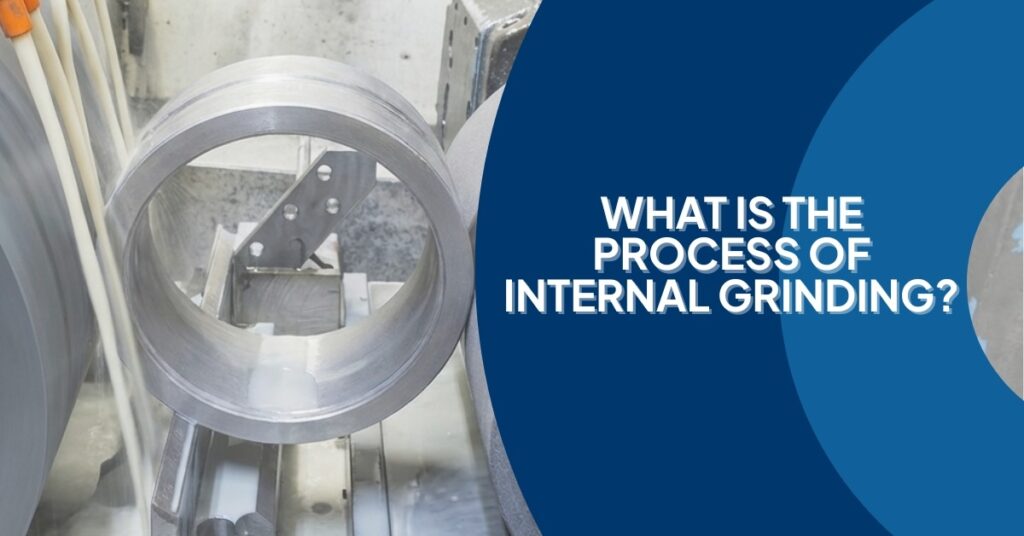
Internal grinding is a specialized machining process that plays a fundamental role in precision engineering. It is essential for producing high-quality internal surfaces in cylindrical components, ensuring they meet stringent specifications.
In this article, we will explore the intricacies of the internal grinding process, exploring its significance, the components involved, and various grinding techniques. For a broader understanding, you can also check out our comprehensive guide on Centerless Grinding, which includes Internal Centerless Grinding as a key sub-topic.
What is the Process of Grinding?
Grinding is a manufacturing process that utilizes an abrasive wheel to remove material from a workpiece, creating a smooth and precise surface. Grinding is essential in manufacturing for achieving tight tolerances, superior surface finishes, and precise dimensional accuracy.
The grinding process generally involves the following steps:
Preparation: Selecting the appropriate workpiece and grinding wheel.
Set up: Securing and aligning the workpiece correctly in the grinding machine.
Grinding: Engaging the grinding wheel with the workpiece to remove material.
Finishing: Inspecting and measuring the workpiece to ensure it meets specifications.
The choice of grinding wheel specification plays a vital role in determining the efficiency of the grinding process. Additionally, utilizing advanced motion control devices can enhance the precision of the grinding process, allowing for more accurate adjustments and improved surface finishes.
What are the Parts of a Grinding Machine?
A grinding machine comprises several key components, each serving a specific function in the grinding process:
Base: Provides stability and support for the machine.
Table: Holds the workpiece and can be adjusted for height and angle.
Grinding Wheel: The primary tool used for material removal.
Motor: Powers the grinding wheel and facilitates its rotation.
Coolant System: Reduces heat generated during grinding, preserving workpiece integrity.
Understanding the role of each machine component is vital for optimizing grinding performance and maintaining accuracy. Also, the integration of automated loading systems can streamline the setup process, reducing downtime and increasing overall efficiency.
What are the Characteristics of a Grinding Wheel?
Grinding wheels are composed of abrasive particles bonded together, forming a hard structure. The composition and structure of a grinding wheel directly influence cutting efficiency, heat generation, and surface finish.
Importance of Wheel Characteristics
Key characteristics of grinding wheels include:
Abrasive Material: Determines the wheel’s cutting ability.
Bond Type: Affects the wheel’s durability and performance.
Grit Size: Influences the surface finish achieved.
Selecting the right grinding wheel specification is essential for achieving desired outcomes in the grinding process. Additionally, understanding the grinding wheel’s hardness can help in selecting the appropriate wheel for specific materials, ensuring optimal performance and longevity.
What is a Type 5 Grinding Wheel?
Type 5 grinding wheels are designed for specific applications, particularly in internal and external grinding. These wheels feature a unique shape that allows for efficient material removal.
Comparison with Other Types
When compared to other grinding wheel types:
Type 5 wheels are more efficient for certain geometries.
They provide better surface finishes due to their design.
Other types may be more suitable for different applications, depending on the material and desired outcome.
The versatility of Type 5 wheels makes them an excellent choice for various internal grinding tasks, especially when precision is paramount.
What is Transverse Grinding?
Transverse grinding is a method where the grinding wheel moves across the workpiece, removing material in a lateral direction. This process is particularly useful for achieving flat surfaces, controlled stock removal, and precise dimensional accuracy.
Versatility: Applicable to various workpiece shapes and sizes.
The transverse grinding method is often preferred for its success in producing high-quality finishes. Additionally, employing advanced grinding machines equipped with real-time monitoring systems can further enhance the precision and efficiency of transverse grinding operations.
What is Creep Feed Grinding Process?
Creep feed grinding is a specialized technique that allows for deeper cuts and higher material removal rates compared to conventional grinding. This method is particularly meaningful in applications requiring high precision.
Differences from Conventional Grinding
Depth of Cut: Creep feed allows for deeper cuts in a single pass.
Feed Rate: The feed rate is slower, enabling better control and finish.
Applications: Ideal for complex shapes and contours.
Utilization of the creep feed grinding process can lead to enhanced machining efficiency and product quality. Additionally, the use of high-performance abrasives in creep feed grinding can considerably improve material removal rates and surface finishes, making it a preferred choice in demanding applications.
What is Form Grinding?
Form grinding is a technique used to create complex shapes and profiles in a workpiece. This method uses specially profiled grinding wheels that replicate the required geometry directly onto the workpiece.
Applications and Benefits
Complex Geometries: Suitable for intricate designs.
High Precision: Achieves tight tolerances and excellent surface finishes.
Efficiency: Reduces the need for multiple machining operations.
Form grinding is essential in manufacturing components that require precise shapes, making it a valuable process in various industries. Additionally, advancements in CAD/CAM integration have made it easier to design and produce custom grinding wheels for form grinding applications, further enhancing efficiency and accuracy.
Conclusion
Internal grinding is a vital component of precision engineering, enabling the production of high-quality internal surfaces that meet rigorous standards. By understanding the various processes, components, and techniques involved, manufacturers can optimize their grinding operations for enhanced efficiency and superior product quality.
Ready to transform your machining capabilities? Contact Us Today for exclusive insights, expert tips, and the latest trends in the industry, and elevate your grinding processes to new heights.
Posted by on | Comments Off on What is internal grinding?
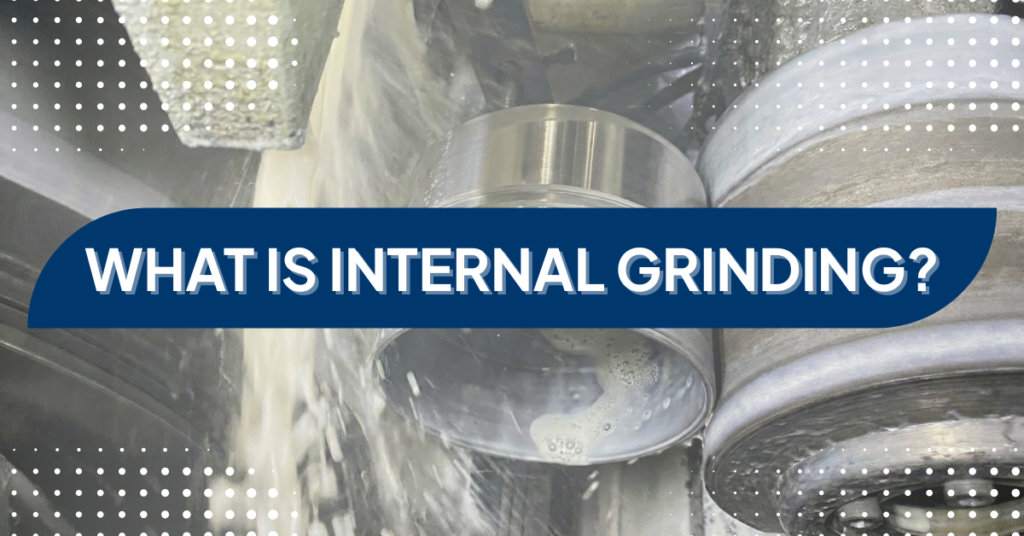
Internal grinding is a critical machining operation used to finish the internal surface, or bore, of a cylindrical workpiece. This precision process achieves the highly accurate internal diameters typically necessary for components requiring tight dimensional control, such as bearing raceways and rings. To achieve this precision, especially in demanding applications, specialized techniques like Internal Centerless grinding are used, adapting the core principles of Centerless Grinding to inner diameters.
The following sections examine the fundamentals of grinding, the specialized nature of internal grinding, and the key components required for this process.
What is meant by grinding?
Grinding is recognized as a high-precision, highly efficient machining process for removing material from workpieces. An abrasive process, it uses a rotating wheel to achieve the remarkably tight tolerances and smooth surface finishes that are essential across modern industry. The evolution of grinding techniques, including centerless methods, made possible not only mass production but also the manufacture of interchangeable spare parts.
What is internal grinding?
Internal grinding is a precision operation executed specifically to refine the bore of a component, ensuring the internal diameter is perfectly cylindrical. This process is essential for finishing features like bearing raceways, where parts demand high precision, sometimes reaching micrometer order grinding accuracy. Two common specialized methods utilized for grinding internal surfaces of rings are the 2-shoe type and the 3-roll type centerless configurations.
What is external grinding?
External grinding is the centerless grinding method’s principle configuration, focusing on finishing the outer cylindrical surface of a workpiece. Unlike chucking methods, external centerless grinding supports the workpiece on a work blade between the grinding wheel and a regulating wheel. This setup eliminates the need for chucking and rotational driving of the workpiece, greatly improving productivity and accuracy.
What wheel should be selected for grinding cemented carbide?
When grinding hard materials such as cemented carbide, specialized abrasive wheels capable of withstanding the material’s hardness are required. For instance, in an experimental in-feed centerless setup involving K-grade cemented carbide (TH10) workpieces, a metal-bonded diamond wheel can be utilized. The use of such a wheel ensures the grinding process maintains stability and efficiency when machining exceptionally hard components.
What is the process of internal grinding wheel?
The process of maintaining the precision and integrity of the internal grinding wheel typically involves specialized preparation steps like high-precision truing and dressing. The process of internal grinding wheel maintenance is crucial; rotary dressing systems are employed to minimize the runout of the wheels. The internal grinding machine must accommodate this specialized wheel setup to successfully machine inner diameters.
Internal Grinding Attachment: Features and Benefits
The primary feature of a specialized Internal Grinding Attachment is the unique support mechanism it employs to hold and drive the hollow workpiece. These machines often eliminate the need for chucking and centering the part, enabling very fast loading and unloading operations critical for high production volumes. Components like shoe-type support systems are frequently employed for both external or internal grinding of rings.
Internal grinding, particularly when utilizing centerless methods, is indispensable for manufacturing precision components in high-volume industries like automotive and bearings. This method achieves exceptional roundness and surface quality by adapting specialized support systems for inner diameters.
We invite you to leverage our expertise and advanced machinery for your most demanding precision component needs. Call 216-732-9000 or Request a Quote with SC Industries today.
Posted by on | Comments Off on How is the internal boring operation performed in cylindrical grinding?
Cylindrical grinding is an essential process in manufacturing, especially for parts requiring precise dimensions and finishes. Among its various operations, internal boring stands out as a vital technique for achieving intricate internal features in cylindrical components. For applications requiring even greater precision without the need for centering, internal centerless grinding offers an advanced alternative that delivers exceptional accuracy.
In this article, we will explore how internal boring is performed in cylindrical grinding, the machinery involved, and key considerations for successful execution.
What is a cylindrical grinding machine used for?
A cylindrical grinder is primarily used for shaping the outer and inner surfaces of cylindrical workpieces. The machine operates by rotating the workpiece against a grinding wheel to achieve high precision, excellent roundness, and smooth finishes.
Applications of Cylindrical Grinding Machines:
Automotive Industry: Used for manufacturing engine components, shafts, and bearings.
Aerospace: Essential for producing parts with stringent tolerances and lightweight materials.
Tool and Die Making: Ideal for creating molds and tools requiring fine details.
General Manufacturing: Applied in various sectors for producing precision parts.
By utilizing a cylindrical grinding machine, manufacturers can achieve high levels of accuracy and repeatability, making it indispensable in modern machining processes. Additionally, advanced CNC cylindrical grinders offer enhanced automation and precision, allowing for complex geometries and reduced cycle times. According to United Grinding North America, “Our cylindrical grinders—composed of STUDER, SCHAUDT and MIKROSA machines—take on just about any ID/OD cylindrical application between centers or with centerless processes.”
What are the operations performed on a grinding machine?
A cylindrical grinding machine can perform several operations, each serving a specific purpose in the grinding process:
External Grinding: Focuses on the outer surfaces of the workpiece.
Internal Grinding: Targets internal diameters and bores, critical for components requiring tight internal tolerances. This operation is typically performed using an internal grinding machine, specifically designed to achieve high precision in internal features.
Centerless Grinding: Enables grinding of parts without centering the workpiece.
Significance of Each Operation:
Internal Grinding: This operation is particularly important for achieving precise internal diameters and smooth finishes in small ID grinding applications. It enhances the functionality of components by ensuring proper fit and alignment. Internal grinding attachments can further increase the versatility of cylindrical grinders, enabling them to handle a wider range of internal features.
External Grinding: Ensures that the outer surfaces meet specified tolerances, critical for components that must fit together seamlessly.
Centerless Grinding: Involves the simultaneous grinding of multiple parts, improving efficiency and reducing production time.
Each operation plays a vital role in the overall grinding process, contributing to the quality and performance of the finished product.
How do you choose the right grinding wheel?
Selecting the appropriate grinding wheel is vital for the success of any grinding operation, including cylindrical grinding. Here are some factors to consider:
Material of the Workpiece: Different materials require specific wheel compositions for optimal performance.
Type of Grinding Operation: Internal grinding typically requires smaller-diameter wheels with finer grit, while external grinding may use larger wheels optimized for higher material removal rates. For internal grinding, wheels with a smaller diameter and a higher grit count are often preferred to achieve finer finishes.
Grit Size: Finer grits provide smoother finishes, while coarser grits are better for material removal.
The choice of wheel type can considerably affect the quality of the finished part. A well-selected grinding wheel can enhance efficiency, reduce wear, and improve the overall surface finish. In addition, bond types (such as vitrified, resin, or metal bonds) influence the performance and longevity of the grinding wheel, making it essential to match the bond with the specific grinding application.
How to calculate the feed rate for grinding?
Calculating the feed rate is essential for achieving desired results in cylindrical grinding. The feed rate determines how quickly the workpiece moves past the grinding wheel, and directly impacts the quality of the finish.
Formula for Feed Rate:
The formula for calculating feed rate (FR) can be expressed as:
Understanding the importance of feed rate helps ensure optimal grinding performance, leading to better surface finishes and dimensional accuracy. Additionally, monitoring the feed rate during the grinding process helps in the early identification of potential issues such as excessive wear on the grinding wheel, or inconsistencies in the workpiece finish. This is particularly critical in small ID grinding, where precision is paramount.
Conclusion:
Internal boring in cylindrical grinding is a specialized operation that requires precise machinery, careful wheel selection, and accurate calculations to achieve the desired results. With an understanding of the intricacies of this process, manufacturers can enhance the quality and functionality of their components.
Are you looking to optimize your cylindrical grinding processes? Request a Quote Today, and gain expert insights, tips, and knowledge of the latest industry trends to elevate your machining capabilities!
Posted by on | Comments Off on What are the advantages of centerless grinding machine?
Centerless grinding is a pivotal process in precision machining, offering numerous benefits to enhance manufacturing efficiency and product quality. As industries increasingly demand tighter tolerances and superior surface finishes, understanding the advantages of centerless grinding becomes essential.
This article provides a direct comparison of centerless grinding with centered grinding, outlines typical setups, and explores the specific advantages these grinding machines bring to the manufacturing landscape.
What is the purpose of centerless grinding?
The primary purpose of centerless grinding is to achieve high precision in the machining of cylindrical components without the need for a fixed center point. This method is particularly advantageous for producing parts that require tight tolerances and excellent surface finishes. Centerless grinding allows for the continuous production of components, significantly increasing efficiency in the manufacturing process.
In essence, the role of a centerless grinding service is to streamline the machining process, enabling manufacturers to produce large volumes of high-quality components with minimal downtime. This is especially critical in industries where precision and efficiency are non-negotiable.
With over 75 years of experience in producing precision hardened metal components, SC Industries Inc. leverages its expertise to ensure that every component meets stringent specifications.
What is the difference between centerless grinding and centered grinding?
The distinction between centerless grinding and centered grinding lies primarily in their setup and operational methodologies.
Setup:
Centerless Grinding: Components are positioned between a grinding wheel and a regulating wheel, allowing for free movement without the need for a fixed center.
Centered Grinding: Components are held in place by centers, requiring precise alignment and setup.
Operation:
Centerless Grinding: Facilitates continuous production, where multiple parts can be ground in succession without stopping the machine.
Centered Grinding: Generally involves more manual intervention and can lead to longer cycle times.
Extremely tight tolerances as low as ±0.0004″ or ±0.0005″, ensuring high-quality output.
Disadvantages of Centerless Grinding:
Limited to cylindrical shapes
Requires precise adjustments for different part sizes
Understanding these differences helps manufacturers select the appropriate grinding method based on their specific requirements.
What is the typical setup for centerless grinding?
A standard centerless grinding grinder setup comprises several key components that work in unison to achieve optimal grinding results:
Grinding Wheel: The primary tool that removes material from the workpiece.
Regulating Wheel: Controls the speed at which the workpiece is fed into the grinding wheel.
Work Rest Blade: Supports the workpiece during grinding.
Adjustable Fixtures: Allow for precise alignment and positioning.
The importance of alignment and positioning cannot be overstated; even minor misalignments can lead to significant deviations in tolerance and surface finish. Proper setup ensures the grinding process remains stable and efficient, contributing to the overall quality of the finished product. SC Industries Inc. employs a certified quality system: ISO 9001:2015, to maintain low defect rates, further enhancing the reliability of its centerless grinding operations.
What are the advantages of grinding machines?
The benefits of using grinding machines, particularly in the context of centerless grinding, are numerous and impactful:
Increased Efficiency: Centerless grinding machines facilitate faster production cycles, enabling manufacturers to meet high demand without sacrificing quality.
Precision: The ability to achieve tolerances as tight as ±0.0004″ or ±0.0005″ ensures that components meet stringent specifications. Centerless grinding can achieve tolerances as tight as ±0.0001 inches (±0.0025 mm), which is crucial for automotive components where exact measurements are essential for performance and reliability.
Enhanced Surface Finishes: Centerless grinding can produce micro-finishes enhancing the performance and longevity of components. The process can produce surface finishes of up to 0.1 microns. This makes it an ideal process for creating smooth, polished surfaces that are free from scratches, burrs, and other imperfections.
Specialized Oil-Grooving: The capability to incorporate custom oil-grooving configurations allows for improved lubrication and performance in high-load applications.
Additionally, the integration of internal cylindrical grinding techniques within centerless setups allows for even greater versatility, enabling manufacturers to produce a wider range of component geometries and sizes.
The advantages of centerless grinding machines are manifold, making them an essential tool in the arsenal of precision machining. As industries continue to evolve, the demand for efficient, high-precision manufacturing processes will only grow, positioning centerless grinding as a key player in meeting these challenges.
Ready to leverage the precision of centerless grinding for your components? Contact our expert team to schedule a consultation. With ISO 9001:2015 certification and proven expertise in precision machining, SC Industries, Inc. is your trusted partner for high-quality components. Reach out now and let’s discuss your project!
Posted by on | Comments Off on What are the advantages and disadvantages of centerless grinding?
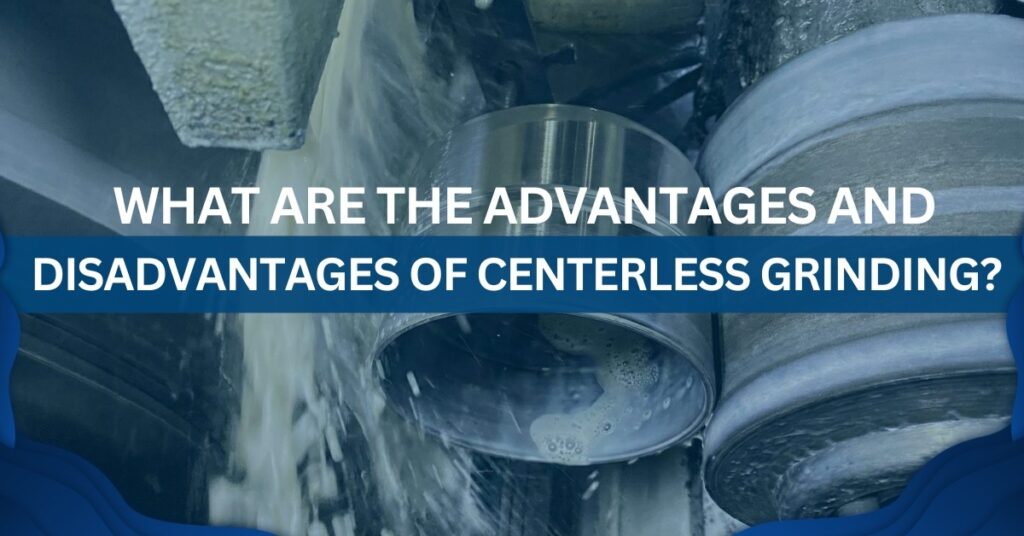
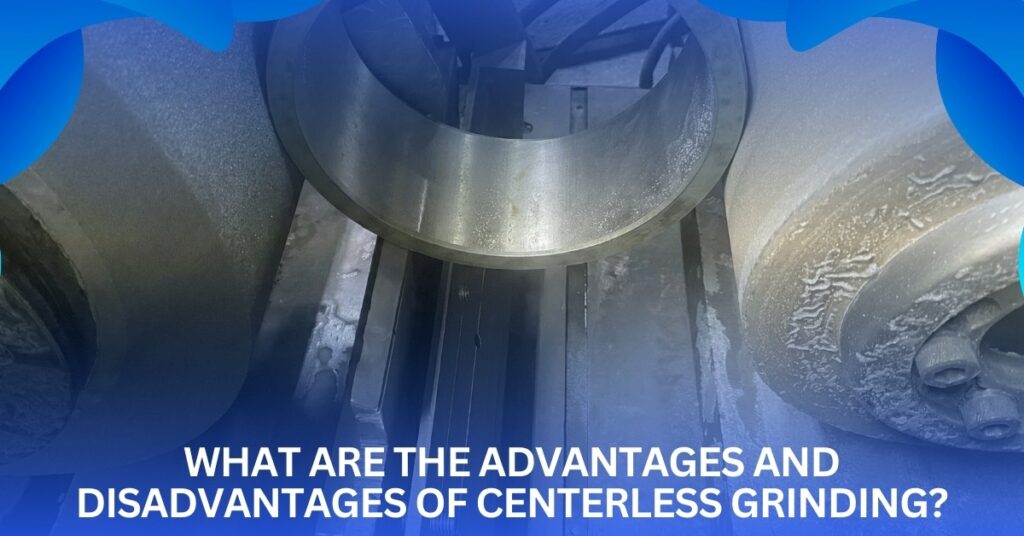
Centerless grinding is a highly efficient machining process that has gained popularity in various manufacturing sectors. As industries strive for precision and productivity, an awareness of the advantages and limitations of centerless grinding is essential for selecting the most appropriate machining method.
In this article, we will explore the different types of grinding machines, compare surface and cylindrical grinding, and examine the pros and cons of centerless grinding. Additionally, we will discuss suitable grinding wheels for carbide, the mechanics of centerless grinding, and the importance of surface grinding speeds and feeds.
What are the types of grinding machines?
Grinding machines come in various forms, each tailored to specific applications. The four main types of grinding machines include:
Centerless Grinders: Ideal for high-volume production, centerless grinders allow for continuous operation without the need for a workholding device, making them highly efficient.
Surface Grinders: These machines are used for flat surfaces, providing a smooth finish on materials. They are suitable for producing parts with precise dimensions.
Cylindrical Grinders: Designed for external and internal cylindrical surfaces, these grinders excel in achieving tight tolerances and are often used for shafts and rods.
Tool & Cutter Grinders: These are specialized machines used for sharpening and shaping cutting tools, ensuring they maintain optimal performance.
Each type of grinding machine has its unique advantages and applications, catering to various machining needs. Understanding these types of grinding processes is essential for selecting the right equipment and achieving the required precision for your manufacturing tasks.
What is the difference between surface grinding and cylindrical grinding?
Surface grinding and cylindrical grinding are two distinct processes, each with its own set of applications and outcomes. Here are the key differences:
Application:
Surface Grinding: Primarily used for flat surfaces, making it ideal for parts that require a smooth finish.
Cylindrical Grinding: Focuses on external and internal cylindrical surfaces, suitable for components like shafts.
Precision:
Surface Grinding: Offers high precision for flat surfaces, with tolerances often in the micrometer range.
Cylindrical Grinding: Also achieves tight tolerances, but is more complex due to the geometry of the workpiece.
Outcomes:
Surface Grinding: Results in a smooth, flat surface.
Cylindrical Grinding: Produces cylindrical components with precise diameters and finishes.
Understanding these differences helps manufacturers choose the appropriate grinding method based on their specific needs.
What are the pros and cons of centerless grinding?
High efficiency: Centerless grinding allows for continuous operation without workholding, significantly increasing production rates.
Precision: This method provides high accuracy and consistency in part dimensions.
Reduced setup time: The absence of a workholding device simplifies the setup process, allowing for quick changeovers.
Versatility: Centerless grinding can accommodate a wide range of materials, including metals and plastics, making it suitable for diverse applications.
Disadvantages:
Limitations in part size: Centerless grinding is not suitable for very large or heavy parts due to the constraints of the machine.
Complexity of part shapes: Parts with intricate geometries may not be successfully processed using this method.
Dependency on material: The efficiency of centerless grinding can vary depending on the material being processed.
Surface finish requirements: While centerless grinding is efficient, it may not always achieve the desired surface finish for certain applications without additional processes.
In all cases it is essential to weigh these pros and cons against your specific machining requirements.
What type of grinding wheel for carbide?
When grinding carbide materials, selecting the right grinding wheel is essential for optimal performance. Suitable grinding wheels for carbide include those designed for extreme hardness and abrasion resistance, such as:
Diamond Wheels: These are the preferred choice for carbide due to their hardness and ability to maintain a sharp edge.
Cubic Boron Nitride (CBN) Wheels: While less common, CBN wheels can also be efficient for specific carbide applications.
Grinding Wheel Loading
Grinding wheel loading occurs when material builds up on the wheel surface, negatively impacting performance. To mitigate this, it’s essential to select the correct wheel and ensure proper coolant application to maintain grinding efficiency. Additionally, using a wheel with an appropriate bond type can enhance the wheel’s performance and longevity.
How does centerless grinding work?
Centerless grinding operates on a unique principle that sets it apart from other grinding methods. The process involves two wheels: a grinding wheel and a regulating wheel. The workpiece is positioned between these wheels, which rotate at different speeds. This configuration allows for continuous rotation and movement of the part without the need for a workholding device.
Centerless Grinding Center Height Formula
Critical to centerless grinding is the centerless grinding center height formula, which determines the optimal positioning of the workpiece relative to the grinding and regulating wheels. Accurate height settings are responsible for maintaining roundness, minimizing chatter, and ensuring consistent part quality. Also, maintaining the correct center height can minimize wear on the grinding wheel and improve overall process efficiency.
What are surface grinding speeds and feeds?
Surface grinding speeds and feeds are vital parameters that influence the efficiency and quality of the grinding process.
Speeds: Refers to the rotational speed of the grinding wheel. Higher speeds can lead to faster material removal but may also increase heat generation.
Feeds: Indicates the rate at which the workpiece is fed into the grinding wheel. Proper feed rates are essential to balance material removal and surface finish. Additionally, understanding the relationship between wheel speed and feed rate can help optimize the grinding process for different materials and desired outcomes.
Understanding these factors is essential for optimizing surface grinding operations and achieving best results.
Conclusion
Centerless grinding stands out as a highly efficient and precise machining method, particularly suited for high-volume production. By understanding its advantages and limitations and the various grinding machines and processes available, manufacturers can make informed decisions that enhance their production capabilities.
Are you ready to elevate your machining processes? Contact Us for expert insights, tips, and the latest industry trends to help you harness the benefits of centerless grinding and other machining methods. Stay ahead of the curve!
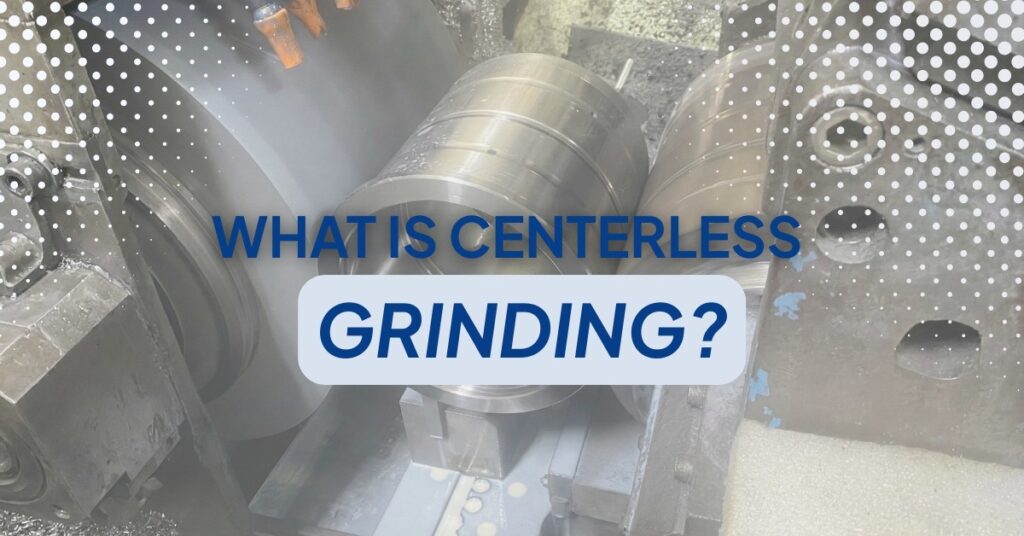
Posted by on | Comments Off on What is Centerless Grinding?
Centerless grinding is a precision machining process that has gained significant traction in various industries due to its efficiency and versatility. Understanding this method is essential for businesses looking to improve precision, throughput, and overall manufacturing efficiency.
In this article, we will explore what centerless grinding is; its basic principles, applications, and more, providing a comprehensive overview for decision-makers in the field.
What is Meant by Centerless Grinding?
Centerless grinding is a machining process involving the removal of material from a workpiece without the need for a spindle or fixture. Instead, the workpiece is supported by a regulating and a grinding wheel, allowing for continuous grinding without the need for centering the workpiece.
So to answer the question: what is centerless grinding?, in sum, it is a method that enables high-precision machining while meaningfully reducing setup time and increasing throughput.
Differences Between Centerless and Traditional Grinding Methods
Setup: Traditional grinding methods typically require the workpiece to be centered and held in place, while centerless grinding allows for faster setup and operation.
Efficiency: Centerless grinding can process multiple parts simultaneously, increasing productivity compared to traditional methods.
Versatility: Centerless grinding accommodates a wide range of materials and geometries, making it ideal for various applications.
Applications of Centerless Grinding
Centerless grinding is widely used in industries such as:
Automotive: For manufacturing precision components like shafts and bearings.
Aerospace: In the production of critical parts that require high tolerances.
Medical: For creating surgical instruments and implants.
Manufacturing: In the production of fasteners and fittings.
Knowledge of what is centerless grinding used for helps businesses leverage this technology to enhance their production processes.
How to Run a Centerless Grinder?
Operating a centerless grinder requires precision and attention to detail. Here’s a step-by-step guide:
Setup: Ensure the machine is clean and properly calibrated.
Load the workpiece: Place the workpiece between the grinding wheel and the regulating wheel.
Adjust the wheels: Set the distance between the wheels according to the specifications of the workpiece.
Start the machine: Engage the machine and monitor the grinding process.
Inspect the output: Regularly check the dimensions and surface finish of the workpiece.
Safety Precautions and Best Practices
Always wear appropriate personal protective equipment (PPE).
Ensure all guards are in place before operating the machine.
Regularly inspect the grinding wheels for wear or damage.
Implement a routine maintenance schedule to enhance machine longevity and performance.
Common Mistakes to Avoid
Neglecting machine maintenance can lead to subpar performance.
Failing to calibrate the wheels properly may result in inaccurate grinding.
Overlooking the importance of proper coolant usage can lead to overheating and affect the quality of the grind.
What are the Parameters of the Grinding Process?
The efficiency of the grinding process is influenced by several key parameters:
Wheel Speed: Higher speeds can improve material removal rates but may also lead to overheating.
Feed Rate: The rate at which the workpiece is fed into the grinding wheel affects surface finish and dimensional accuracy.
Workpiece Material: Different materials require specific wheel types and grinding techniques for optimal results.
Coolant Application: Proper coolant type, flow, and direction reduce heat generation, improve surface finish, and extend wheel life.
Aluminum Oxide: Commonly used for general-purpose grinding.
Silicon Carbide: Ideal for hard materials and achieving fine finishes.
Cubic Boron Nitride (CBN): Often used for high-speed applications and hard materials, providing superior wear resistance.
Impact of Grinding Wheel Choice
The choice of grinding wheel affects:
Material Removal Rate: Different wheels can optimize efficiency based on the material being processed.
Surface Finish: The right wheel contributes to achieving the desired finish on the workpiece.
Cost Efficiency: Selecting the appropriate wheel can lead to reduced operational costs by minimizing wear and tear on equipment.
A full understanding of what is a centerless grinding wheel helps in selecting the appropriate wheel for specific applications.
Centerless Grinding Service Cost
Centerless grinding service cost can vary based on several factors:
Complexity of the workpiece: More intricate designs may incur higher costs.
Material type: Hard or heat-sensitive materials may require specialized wheels, fixtures, or coolant systems, which can increase cost.
Volume of work: Larger orders often result in lower per-unit costs.
Precision requirements: Higher-precision demands can lead to increased costs due to the need for advanced machinery and skilled operators.
Tips for Getting Quotes and Evaluating Service Providers
Request detailed quotes that logically break down costs.
Compare service providers based on experience and customer reviews.
Consider the provider’s ability to meet tight tolerances and deadlines.
Inquire about their quality control measures to ensure consistent output.
Conclusion
Understanding what is centerless grinding is essential for businesses aiming to improve their manufacturing processes. With its unique advantages and applications across various industries, centerless grinding presents a valuable solution for precision machining needs.
Ready to dive deeper into the sector of centerless grinding? Contact us today for expert insights, tips, and the latest industry trends that can elevate your machining processes. Join our community and stay ahead of the curve!