



Bushings are integral components used across various industries due to their versatility and importance in ensuring proper equipment functionality. From automotive systems to mechanical equipment to electrical applications, bushings play a vital role in reducing friction, absorbing shocks, and ensuring smooth operations.
But what exactly are bushings, how do they work, and how do they compare to other components like bearings? This guide will break down their functions, applications, and advantages to give you a clear understanding of these essential components.
What is a bushing vs bearing?
Although bushings and bearings serve similar purposes, their design and operation make them distinct. Both help minimize friction and enable smooth motion between two surfaces, but they accomplish this in different ways:
Bushings are sleeve-like components, often cylindrical, that act as a sliding surface between two parts. They’re made from materials such as metals (e.g., bronze or brass), rubber, or polymers. Bushings are simple and cost-effective, often favored in systems where heavy loads and slower speeds are involved.
In contrast, Bearings include rolling elements like balls or rollers. These components are designed to minimize friction more effectively, making them ideal for high-speed, low-load applications where precision is critical.
Key Differences:
- Construction:
- Bushings are solid, cylindrical components.
- Bearings contain rolling elements that assist in reducing friction.
- Use Cases:
- Bushings work well in low-speed systems with heavy loads and are easier to replace.
- Bearings suit high-speed machinery requiring greater precision and efficiency.
When weighing bushings vs. bearings, it’s crucial to evaluate the demands of your system to make the right choice. Bushings excel in durability and cost-effectiveness, while bearings are more suitable for high-precision environments. In many designs, you’ll also find hybrid terms like bearing bushing sleeve used to describe components that combine features of both.
Material Selection and Innovation in Bushings
In recent years, advancements in materials science have led to the development of high-performance bushings that outperform traditional options. For instance, composite bushings made from thermoplastics reinforced with glass or carbon fibers offer exceptional wear resistance and low maintenance.
These innovations make bushings more adaptable across diverse environments such as aerospace or renewable energy sectors, where durability and performance are non-negotiable.
Are Bushings Better Than Bearings?
Determining whether bushings are “better” than bearings largely depends on the specific application. Each component has its strengths:
Advantages of Bushings:
- Durability: Bushings made from materials like bronze or brass are highly resistant to wear and can withstand harsh operating conditions.
- Cost-Effectiveness: They are generally more affordable than bearings and provide enhanced long-term value in many systems.
- Simple Replacement: Replacing bushings tends to be straightforward, reducing downtime during maintenance.
- Versatility: Bushings can function effectively in extreme environments, including high-temperature or corrosive situations.
Advantages of Bearings:
- Low Friction: Bearings significantly reduce friction, making them ideal for high-speed applications.
- Precision: Their design allows for greater accuracy in movement and alignment.
- Higher Speed Performance: Bearings perform best in setups with high rotational speeds and lighter loads.
Maintenance and Lubrication Considerations
Maintenance is a critical factor when deciding between bushings and bearings. Bushings often require less frequent lubrication and can operate under marginal lubrication conditions, making them ideal for hard-to-reach areas. Some modern bushings are even self-lubricating, incorporating materials like PTFE or graphite that reduce friction without external lubricants. Bearings, while efficient, typically require regular lubrication to maintain performance and avoid premature wear.
Ultimately, selecting bushings or bearings depends on the specific needs of your system. For heavy loads at slower speeds, bushings are an excellent choice. For speed, precision, and minimal friction, bearings are better suited.
Environmental Conditions and their Impact on Bushing Performance
The performance and lifespan of a bushing can be significantly influenced by environmental factors such as temperature extremes, humidity, exposure to chemicals, and abrasive contaminants. For example, bushings used in mining or agriculture may encounter constant exposure to dirt and moisture, requiring sealed or self-lubricating designs. In contrast, applications in cleanrooms or food processing environments demand non-contaminating, hygienic materials like PTFE or stainless steel. Choosing the right bushing for specific conditions ensures reliable operation and reduces the risk of premature failure.

What are the bushings on a car?
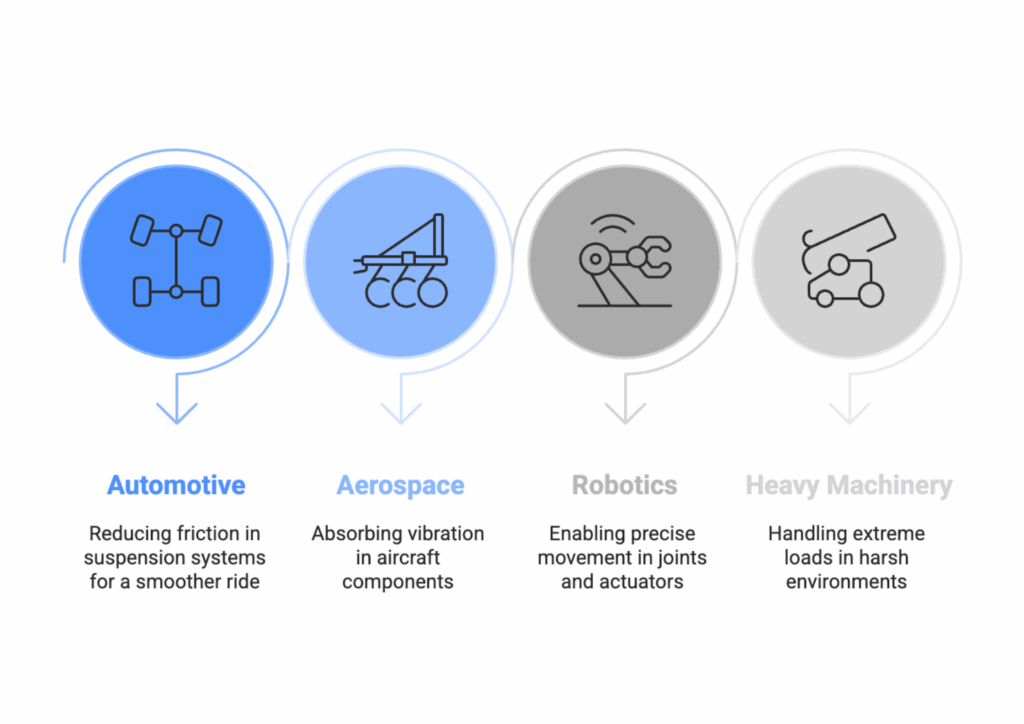
Bushings serve an indispensable role in vehicle suspension systems. These small components, commonly referred to as bushings car in automotive contexts, connect suspension components like control arms or stabilizer bars to the chassis. They help absorb shocks, reduce noise, and enable smooth movement.
Key Functions of Automotive Bushings:
- Shock Absorption: Bushings absorb road vibrations, ensuring a smoother and more comfortable ride.
- Flexibility: They allow suspension components to move freely without transmitting excessive force to the chassis.
- Noise Reduction: By minimizing vibrations, bushings reduce noise inside the vehicle.
Signs of Worn in Automotive Bushings
Monitoring the condition of your bushings can prevent further damage to the vehicle’s suspension system. Common signs of excessive wear include unusual noises such as clunking or squeaking, especially when driving over bumps or turning. You might also notice increased vibration through the steering wheel or reduced handling performance. Timely inspection and replacement are key to maintaining ride quality and vehicle safety.
Automotive bushings are commonly made from rubber for flexibility or metal for durability. The material choice depends on the performance requirements, with rubber offering better comfort and metal delivering greater strength.
OEM vs. Aftermarket Bushings
When replacing bushings, users often face a choice between original equipment manufacturer (OEM) components and aftermarket alternatives. OEM bushings are designed to match factory specifications, ensuring consistent performance. Aftermarket options in contrast may offer performance enhancements, material upgrades, or cost savings. However, quality can vary widely among aftermarket brands, making it essential to choose reputable suppliers. For critical systems like suspension or power transmission, selecting the right supplier can significantly impact safety and reliability.
What are bushings in a transformer?
Beyond automotive and mechanical systems, bushings also play a vital role in electrical applications, particularly in transformers. Transformer bushings enable electrical conductors to pass safely through grounded barriers such as the walls of a transformer, while maintaining insulation.
Functions of Transformer Bushings:
- Electrical Insulation: Bushings insulate electrical conductors, preventing short circuits and ensuring safety.
- Mechanical Support: They provide stability for conductors transitioning through barriers.
- Heat Dissipation: High-quality materials used in transformer bushings aid in cooling and heat management in electrical systems.
Types of Transformer Bushings
Transformer bushings can be broadly classified into oil-impregnated paper (OIP) and resin-impregnated paper (RIP) bushings. OIP bushings are immersed in insulating oil and are known for their excellent dielectric properties. However, they require regular monitoring to avoid leakage. In contrast, RIP bushings use resin as an insulator and are more environmentally friendly due to their dry-type construction. Each type offers distinct advantages depending on the installation and maintenance requirements.
Materials like porcelain and composite polymers are often used for transformer bushings due to their insulating properties and durability. Regular inspections are crucial to maintain the efficiency and safety of these critical components.
Are bushings bronze or brass?
The material composition of bushings is a key factor in their performance. Two common materials are bronze and brass, each offering unique benefits:
Bronze Bushings:
- Known for their strength, durability, and wear resistance.
- Ideal for heavy-duty applications for handling high loads and strenuous conditions.
Brass Bushings:
- Easier to machine, making them suitable for precision applications.
- Excellent corrosion resistance, making them effective in marine or water-related environments.
- Softer than bronze, which may make them less durable in certain setups.
How to Choose the Right Bushing Material
When selecting a bushing material, consider factors such as operating temperature, exposure to chemicals, load capacity, and lubrication availability. For instance, polymer bushings are excellent in corrosive environments, while sintered bronze bushings perform well under high loads with intermittent motion. Consulting a material compatibility chart or supplier guide can help ensure the longevity and effectiveness of the bushing in your application.
The choice between bronze and brass depends on your specific needs, but both materials deliver the durability and reliability of metal bushings.
What do stiffer bushings do?
The stiffness of a bushing directly influences its performance, especially in automotive and mechanical systems.
Benefits of Stiffer Bushings:
- Improved Control:
- Stiffer bushings reduce excessive movement, enhancing stability and handling.
- Enhanced Precision:
- They maintain alignment more effectively, which is crucial for performance-driven applications.
- Durability:
- Stiffer materials resist compression, extending the lifespan of the component.
However, there’s a trade-off. Stiffer bushings may increase noise and vibrations, making them less suitable for applications prioritizing comfort.
Should I get hard or soft bushings?
When replacing bushings, it’s essential to consider whether hard or soft options are best for your situation.
Hard Bushings:
- Offer higher durability and better control for performance-focused or heavy-duty systems.
- Limit flexibility, which prioritizes precision over comfort.
Soft Bushings:
- Provide a quieter, more comfortable experience by reducing vibrations and noise.
- They are more flexible, making them ideal for less demanding applications.
Custom Bushings and Performance Tuning
In performance applications—like motorsports or specialized machinery—custom bushings are often engineered to meet specific tolerances and stiffness ratings. These bushings can be tailored using CNC machining and advanced materials to achieve the perfect balance between rigidity and compliance. Tuned bushings enhance the dynamics of a system, offering a competitive edge in both precision and durability.
Noise, Vibration, and Harshness (NVH) in Bushing Design
Engineers often consider NVH characteristics when designing or selecting bushings. In automotive and industrial machinery, soft or elastomeric bushings help dampen vibrations and reduce transmitted noise. However, in high-performance setups, stiffer bushings may be chosen to improve handling or precision, accepting slightly increased noise levels as a trade-off. Balancing NVH considerations with performance requirements is essential for achieving an optimal user experience, especially in consumer-facing products.
Are Bushings Expensive to Replace?
The cost of replacing bushings depends on several factors, including the type of bushing, its material, and labor expenses. When considering bushings metal price, it’s important to weigh durability against upfront cost.
- Metal Bushings tend to be more expensive due to material costs, but typically offer a longer lifespan.
- Rubber Bushings are more affordable but may wear out faster, requiring more frequent replacements.
- Labor Costs can add up, as replacing bushings often involves disassembling adjacent components.
While bushing replacement costs can vary, ensuring your bushings are in good condition helps maintain system longevity and prevent more significant, costly damage.
Future Trends in Bushing Technology
As industries evolve, so does bushing technology. Emerging trends include smart bushings equipped with sensors that monitor vibration, load, and temperature in real-time. These intelligent components enable predictive maintenance, reducing downtime and extending equipment life. Additionally, sustainability is becoming a key consideration, with manufacturers exploring biodegradable materials and eco-friendly production processes to meet environmental regulations.
Installation Techniques and Best Practices
Proper installation is crucial to ensuring that bushings perform as intended. Common methods include press-fitting, bonding with adhesives, or using flanged designs that are easier to align and secure. Improper installation can lead to premature wear, misalignment, or even structural damage. Always follow the manufacturer’s guidelines, including recommended tolerances, lubrication requirements, and tool selection, to achieve a secure and lasting fit. Technicians should also inspect the housing and shaft for wear or scoring before inserting a new bushing.
Bushing Lifecycle and Replacement Guidelines
Understanding the expected life cycle of a bushing helps in planning maintenance schedules and avoiding unexpected breakdowns. Most bushings are rated based on operational hours or load cycles, which can vary depending on material, usage conditions, and installation quality. Regular inspections for signs of cracking, deformation, or unusual movement are essential.
Some industries implement condition-based monitoring systems to detect wear trends over time. Replacing bushings proactively—rather than reactively—helps maintain system efficiency, reduces downtime, and prevents damage to adjacent components. Establishing replacement intervals based on manufacturer specifications or field data is a best practice for long-term equipment reliability.
Conclusion
Bushings are unsung heroes in countless systems, balancing functionality and durability while providing cost-effective solutions. From reducing noise and vibrations in vehicles to offering insulation and stability in transformers, these components are indispensable in countless applications. Understanding the nuances of bushings – from materials like bronze and brass, to choosing between hard and soft options – is key to optimizing performance and extending the life of your systems. Investing in the right bushing ensures long-term performance, safety, and reliability.
For further insights or assistance with selecting the right bushings for your needs, reach out to SC Industries to explore tailored solutions for your applications.
Frequently Asked Questions
What types of bushings does SC Industries, Inc. manufacture?
SC Industries, Inc. manufactures a diverse range of bushings specifically designed for demanding industrial and OEM applications.
- Our offerings include custom designs with unique oil-grooving patterns such as helical.
- With over 75 years of experience, we focus on precision engineering, achieving tolerances as tight as ±0.0004″ and maintaining rigorous quality control processes that align with our ISO 9001:2015 certification.
How do I determine if I need bushings or bearings for my application?
Choosing between bushings and bearings depends on your application's specific requirements.
- Bushings are ideal for high-load, low-speed applications where simplicity and durability are essential.
- At SC Industries, Inc., our expert team can provide insights into material compatibility and design considerations, utilizing our 75 years of experience in producing precision hardened metal bushings to ensure optimal performance in your unique environment.
What are the benefits of using bushings over bearings?
Bushings provide several advantages that can enhance your machinery's performance.
- They often require less maintenance than bearings, reducing downtime and operational costs.
- Our bushings, engineered with over 75 years of experience, are designed to withstand high loads and extreme conditions, ensuring reliable operation.
- Additionally, our specialized oil-grooving options allow for custom configurations tailored to specific applications, providing greater flexibility in machinery design.
Can SC Industries, Inc. customize bushings for specific applications?
Yes, SC Industries, Inc. excels in providing customized bushing solutions tailored to unique needs.
- Our innovative design process allows for the integration of specific features like enhanced lubrication channels and load-bearing capacities, which are crucial for understanding bushings in various applications.
- With a dedicated team of engineers, we ensure that each bushing meets the exact performance criteria required by our clients.
What industries can benefit from SC Industries, Inc. bushings?
SC Industries, Inc. bushings are utilized across various industries requiring robust performance.
- Key sectors include aerospace, marine, and manufacturing, where our precision hardened metal bushings, with tight tolerances , ensure reliability in demanding applications.
- Our commitment to innovation enables us to develop tailored solutions, such as specialized oil-grooving configurations, that address the unique challenges faced by each industry.
How can I request a quote for bushings from SC Industries, Inc.?
Requesting a quote from SC Industries, Inc. is straightforward and efficient.
- Visit our website and fill out the inquiry form, detailing your specifications and requirements related to bushings.
- Our dedicated team will review your request and get back to you quickly to discuss your needs and provide a customized quote, ensuring you understand the various types of bushings as outlined in our comprehensive guide.
- We prioritize clarity and accuracy in our pricing to assist you in making informed decisions.
What is the expected lifespan of SC Industries, Inc. bushings?
The lifespan of SC Industries, Inc. bushings is influenced by factors such as load conditions and environmental factors.
- Our bushings are engineered with over 75 years of expertise, designed to withstand extreme conditions, often exceeding the performance of conventional components in demanding applications.
- Regular maintenance and adherence to operational guidelines, such as our recommended inspection intervals, can greatly extend their service life.
- Understanding bushings is essential for optimizing their longevity, and our technical team is available to offer tailored recommendations for ensuring the best performance in various applications.