


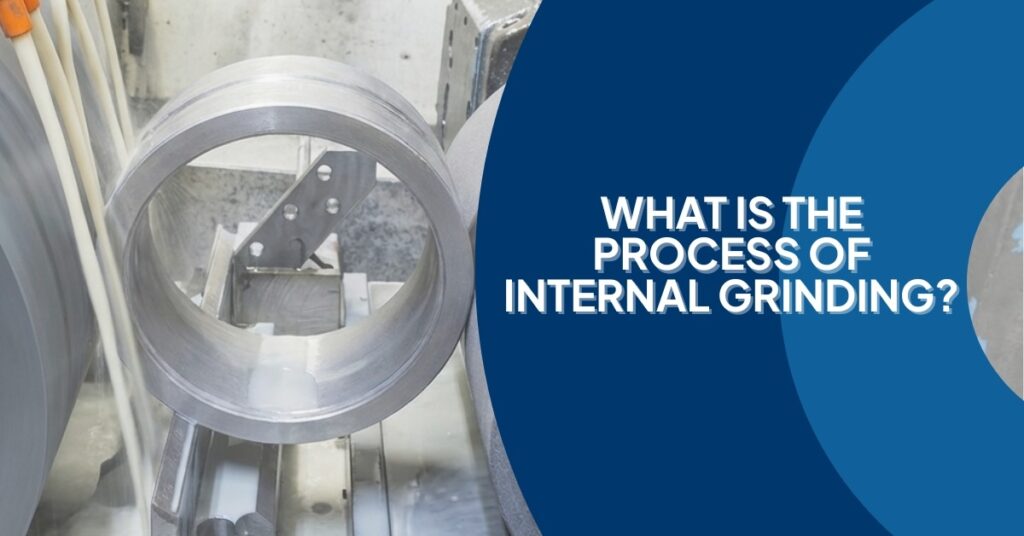
Internal grinding is a specialized machining process that plays a fundamental role in precision engineering. It is essential for producing high-quality internal surfaces in cylindrical components, ensuring they meet stringent specifications.
In this article, we will explore the intricacies of the internal grinding process, exploring its significance, the components involved, and various grinding techniques. For a broader understanding, you can also check out our comprehensive guide on Centerless Grinding, which includes Internal Centerless Grinding as a key sub-topic.
What is the Process of Grinding?
Grinding is a manufacturing process that utilizes an abrasive wheel to remove material from a workpiece, creating a smooth and precise surface. Grinding is essential in manufacturing for achieving tight tolerances, superior surface finishes, and precise dimensional accuracy.
The grinding process generally involves the following steps:
- Preparation: Selecting the appropriate workpiece and grinding wheel.
- Set up: Securing and aligning the workpiece correctly in the grinding machine.
- Grinding: Engaging the grinding wheel with the workpiece to remove material.
- Finishing: Inspecting and measuring the workpiece to ensure it meets specifications.
The choice of grinding wheel specification plays a vital role in determining the efficiency of the grinding process. Additionally, utilizing advanced motion control devices can enhance the precision of the grinding process, allowing for more accurate adjustments and improved surface finishes.
What are the Parts of a Grinding Machine?
A grinding machine comprises several key components, each serving a specific function in the grinding process:
- Base: Provides stability and support for the machine.
- Table: Holds the workpiece and can be adjusted for height and angle.
- Grinding Wheel: The primary tool used for material removal.
- Motor: Powers the grinding wheel and facilitates its rotation.
- Coolant System: Reduces heat generated during grinding, preserving workpiece integrity.
Understanding the role of each machine component is vital for optimizing grinding performance and maintaining accuracy. Also, the integration of automated loading systems can streamline the setup process, reducing downtime and increasing overall efficiency.
What are the Characteristics of a Grinding Wheel?
Grinding wheels are composed of abrasive particles bonded together, forming a hard structure. The composition and structure of a grinding wheel directly influence cutting efficiency, heat generation, and surface finish.
Importance of Wheel Characteristics
Key characteristics of grinding wheels include:
- Abrasive Material: Determines the wheel’s cutting ability.
- Bond Type: Affects the wheel’s durability and performance.
- Grit Size: Influences the surface finish achieved.
Selecting the right grinding wheel specification is essential for achieving desired outcomes in the grinding process. Additionally, understanding the grinding wheel’s hardness can help in selecting the appropriate wheel for specific materials, ensuring optimal performance and longevity.
What is a Type 5 Grinding Wheel?
Type 5 grinding wheels are designed for specific applications, particularly in internal and external grinding. These wheels feature a unique shape that allows for efficient material removal.
Comparison with Other Types
When compared to other grinding wheel types:
- Type 5 wheels are more efficient for certain geometries.
- They provide better surface finishes due to their design.
- Other types may be more suitable for different applications, depending on the material and desired outcome.
The versatility of Type 5 wheels makes them an excellent choice for various internal grinding tasks, especially when precision is paramount.
What is Transverse Grinding?
Transverse grinding is a method where the grinding wheel moves across the workpiece, removing material in a lateral direction. This process is particularly useful for achieving flat surfaces, controlled stock removal, and precise dimensional accuracy.
Advantages of Transverse Grinding
- Efficiency: Faster material removal rates.
- Precision: Enhanced control over surface finish.
- Versatility: Applicable to various workpiece shapes and sizes.
The transverse grinding method is often preferred for its success in producing high-quality finishes. Additionally, employing advanced grinding machines equipped with real-time monitoring systems can further enhance the precision and efficiency of transverse grinding operations.
What is Creep Feed Grinding Process?
Creep feed grinding is a specialized technique that allows for deeper cuts and higher material removal rates compared to conventional grinding. This method is particularly meaningful in applications requiring high precision.
Differences from Conventional Grinding
- Depth of Cut: Creep feed allows for deeper cuts in a single pass.
- Feed Rate: The feed rate is slower, enabling better control and finish.
- Applications: Ideal for complex shapes and contours.
Utilization of the creep feed grinding process can lead to enhanced machining efficiency and product quality. Additionally, the use of high-performance abrasives in creep feed grinding can considerably improve material removal rates and surface finishes, making it a preferred choice in demanding applications.
What is Form Grinding?
Form grinding is a technique used to create complex shapes and profiles in a workpiece. This method uses specially profiled grinding wheels that replicate the required geometry directly onto the workpiece.
Applications and Benefits
- Complex Geometries: Suitable for intricate designs.
- High Precision: Achieves tight tolerances and excellent surface finishes.
- Efficiency: Reduces the need for multiple machining operations.
Form grinding is essential in manufacturing components that require precise shapes, making it a valuable process in various industries. Additionally, advancements in CAD/CAM integration have made it easier to design and produce custom grinding wheels for form grinding applications, further enhancing efficiency and accuracy.
Conclusion
Internal grinding is a vital component of precision engineering, enabling the production of high-quality internal surfaces that meet rigorous standards. By understanding the various processes, components, and techniques involved, manufacturers can optimize their grinding operations for enhanced efficiency and superior product quality.
Ready to transform your machining capabilities? Contact Us Today for exclusive insights, expert tips, and the latest trends in the industry, and elevate your grinding processes to new heights.