


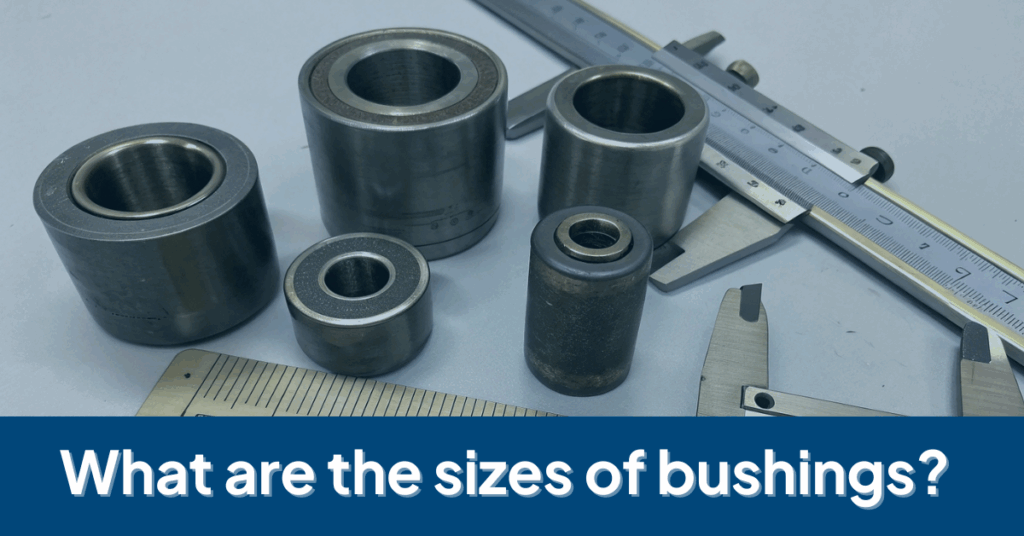
Bushings are essential components designed to reduce friction between moving parts in a wide range of applications, from industrial machinery to automotive systems. Selecting the right bushing requires a clear understanding of bushing sizes, which vary depending on their specific use.
Available in both metric and imperial measurements, bushing diameters can range from just a few millimeters to several inches, with custom options also available for a precise fit. Key factors to consider when choosing a bushing include the inner and outer diameter, length, and material, as these directly impact performance and durability.
Whether you’re working with steel bushings or other types, addressing these considerations ensures optimal functionality for your application.
Are all bushings the same size?
No – bushings come in a wide range of sizes designed to fit specific applications. Depending on your project and the required precision, you might encounter different types, including custom drill bushings and steel flange bushing components.
Custom Drill Bushings
Custom drill bushings are specialized pieces tailored for specific uses. Frequently employed in industrial and manufacturing settings, they guide tools like drill bits with exceptional accuracy. Since these are custom-made, their dimensions can vary widely to meet specific machine requirements or application needs.
Flange Bushing Steel
Often constructed from steel, flange bushings are unique in their design, having a flange or lip on one end. Once installed, this feature prevents axial movement. Their size depends on the diameter and length required. They’re commonly used in automotive and heavy machinery, where precise alignment is critical.
What are the different bushing sizes?
Bushings come in multiple standard sizes and can also be uniquely tailored for specific designs. If you’re working with standard bushing sizes or need a steel bushing size chart, there are plenty of options to consider:
Standard Bushing Sizes
Standard sizes are widely available for industrial machines, cars, and more. For instance:
- Inner diameters typically range from 0.25 inches to 3 inches.
- Lengths and outer diameters vary depending on the housing and application.
These standard options simplify replacement processes and are cost-effective when customization isn’t needed.
Steel Bushing Size Chart
A steel bushing size chart is your go-to reference for selecting the right fit. Such charts provide detailed measurements, including:
- Inner diameter (ID)
- Outer diameter (OD)
- Overall length (OL).
For example, a standard steel bushing might list an ID of 1 inch, an OD of 1.5 inches, and an OL of 2 inches. These metrics ensure compatibility with your project’s specifications.
How are bushings measured?
Measuring bushings involves focusing on a few critical dimensions to ensure the component fits properly and functions as expected. Here’s what you need to consider:
- Inner Diameter (ID) – This is one of the most important measurements as it determines whether the bushing will fit around the shaft or rod.
- Outer Diameter (OD) – The outer diameter must match the housing or bore where the bushing will be seated.
- Length (or Height) – This refers to the overall length of the bushing. An improper length could lead to movement or instability.
Calipers, micrometers, or specialized measurement tools can be used to achieve accurate readings for each aspect.
How do you determine bushing size?
To determine the right bushing size, start with the application in mind. Since bushings must offer proper alignment and reduce wear between parts, obtaining the correct dimensions is critical.
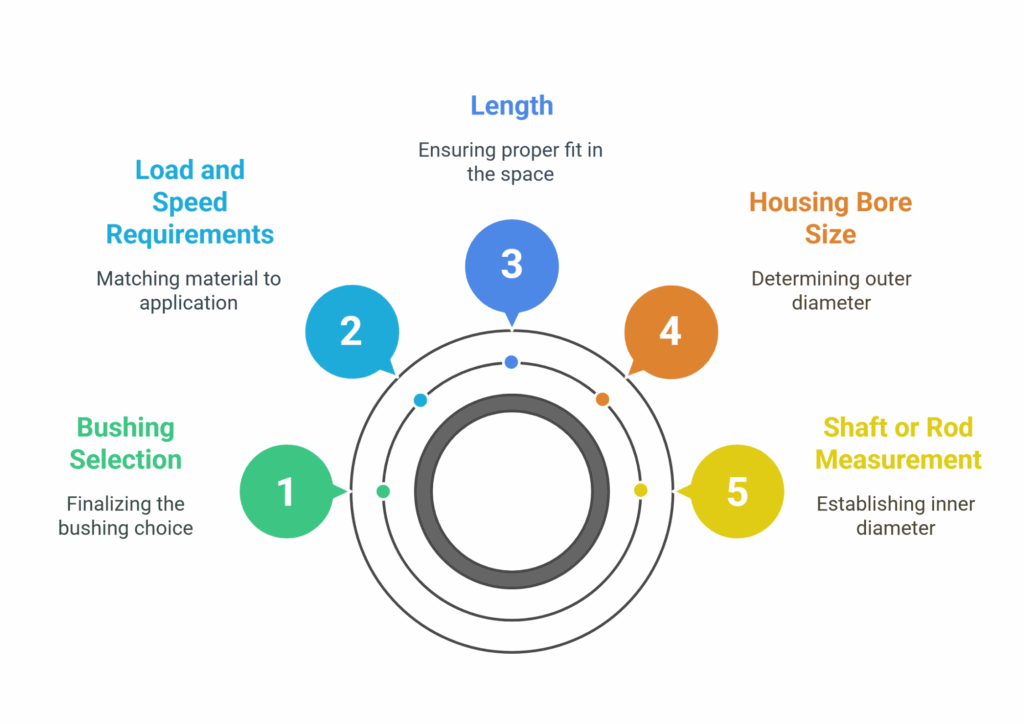
Steps to Determine Bushing Size:
- Measure the Shaft or Rod
Use calipers to measure the outer diameter of the rod or shaft. This measurement becomes the inner diameter (ID) of the bushing. - Determine the Housing’s Bore Size
Similarly, measure the bore (housing or shell) where the bushing will fit. This value determines the outer diameter (OD) of the bushing. - Check the Length
The length of the space where the bushing will sit is your guide for the overall length or height of the bushing. - Confirm Load and Speed Requirements
Not all bushings are created equal. For example, high-speed applications may require lightweight materials, while heavy loads might necessitate steel construction.
Pro Tip
For complicated installations or unusual sizes, seek support from a steel bushing size chart or consult with manufacturers about custom solutions, like custom drill bushings.
Conclusion
Selecting the right bushing for your application is crucial to ensuring optimal performance and longevity. By carefully evaluating factors such as dimensions, material type, load, and speed requirements, you can make an informed choice that suits your specific needs. Remember to use resources like a steel bushing size chart or consult manufacturers for custom solutions when dealing with unique requirements. Contact a trusted supplier or manufacturer today to get started!.
Frequently Asked Questions
What are the standard sizes of bushings available at SC Industries, Inc.?
At SC Industries, Inc., we offer a wide range of bushing sizes tailored to meet your specifications. Our bushings can be manufactured in various diameters and lengths based on your needs, including:
- Standard sizes of bushings available in common diameters and lengths
- Custom sizes to fit your application requirements
- Precision tolerances down to ±0.0004″ or ±0.0005″
- Ability to accommodate specific configurations like oil-grooving
Can I request custom-sized bushings from SC Industries, Inc.?
Absolutely! SC Industries, Inc. specializes in producing custom-sized bushings tailored to your unique application demands. We provide:
- Tailored dimensions based on your specifications, including various sizes of bushings to fit your needs, with tolerances as tight as ±0.0004″.
- State-of-the-art manufacturing techniques, including multi-axis CNC machining, that enhance precision and efficiency.
- Rigorous testing protocols to ensure performance and durability, backed by our ISO 9001:2015 certification.
How do I determine the right bushing size for my application?
Selecting the right bushing size involves considering factors like load, speed, and mounting options. At SC Industries, Inc., we recommend:
- Evaluating the operating environment to ensure compatibility with materials
- Reviewing the application’s dynamic conditions to optimize performance
- Understanding the specific sizes of bushings available, such as our precision hardened metal bushings with tolerances as low as ±0.0004″, to ensure the correct fit for your application
- Collaborating with our engineering team for tailored solutions based on your specific needs.
What materials are used for manufacturing bushings at SC Industries, Inc.?
SC Industries, Inc. uses high-quality materials to manufacture our bushings, ensuring durability and performance. Our materials include:
- High-strength polymers for lightweight applications, specifically engineered for various industrial uses.
- Composite materials that offer resistance to corrosion and wear, designed in different sizes for compatibility with our precision components.
- Advanced manufacturing techniques, including our specialized oil-grooving, to optimize precision and fit, allowing for a range of bushing sizes tailored to meet specific customer requirements.
Can SC Industries, Inc. provide bushings with specific tolerances?
Yes, SC Industries, Inc. excels in producing bushings with extremely tight tolerances. We offer:
- Tolerances as low as ±0.0004″ or ±0.0005″
- Advanced CNC machining techniques to achieve precision for various sizes of bushings
- Rigorous testing protocols to ensure adherence to customer specifications
What is the importance of precision in bushing sizes?
Precision in bushing sizes is essential for optimal machinery function and durability. At SC Industries, Inc., we emphasize this by providing:
- Tight tolerances that ensure a perfect fit and reduce vibration for various bushing sizes
- Advanced surface treatments that enhance wear resistance and extend service life
- Proven techniques developed through decades of industry experience
How does SC Industries, Inc. ensure quality in its bushing manufacturing?
Quality assurance is a cornerstone of SC Industries, Inc.'s manufacturing process. We ensure quality by:
- Adhering to stringent industry standards, specifically ISO 9001:2015, which helps maintain our low defect rates.
- Utilizing advanced inspection technologies, such as 3D scanning, to verify the dimensions and sizes of our precision bushings, ensuring tight tolerances .
- Fostering a culture of quality through employee training and engagement, ensuring every team member is committed to our high standards.