



Oil-Grooved vs. Plain Thrust Washers: Does Your Application Need Grooving?
Comments Off on Oil-Grooved vs. Plain Thrust Washers: Does Your Application Need Grooving?Key takeaways: Thrust washers sit at the intersection of load path and lubrication strategy. The decision to groove or leave a face plain determines how well a bearing survives high speed, heavy load, or continuous duty. Yet many engineers default to grooving without examining whether their application actually demands it. This look at Plain Thrust […]
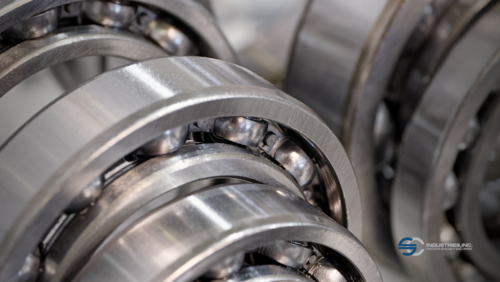
Plain Thrust Bearings: Washers, Sleeves, and Custom-Machined Components
Comments Off on Plain Thrust Bearings: Washers, Sleeves, and Custom-Machined ComponentsKey takeaways: Axial force is the thrust that pushes along a shaft rather than turning around it, demanding a bearing surface engineered to slide under load, not roll across it. Plain thrust bearings like washers, sleeves, and custom-machined components deliver that sliding-contact solution: hardened, ground steel parts that hold axial position and spread load across […]
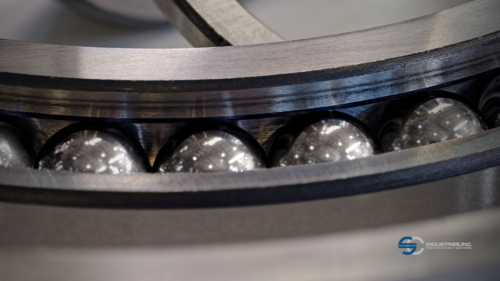
What Causes Thrust Bearing Failure? Causes, Prevention and Material Selection
Comments Off on What Causes Thrust Bearing Failure? Causes, Prevention and Material SelectionKey takeaways: Thrust bearings carry axial load across a comparatively small face, so every decision about material, hardness, and surface finish ultimately results in either a long service life or early distress. Failure is not random; it follows from specification drift, process shortcuts, or neglected maintenance. This article examines the failure modes a manufacturer can […]
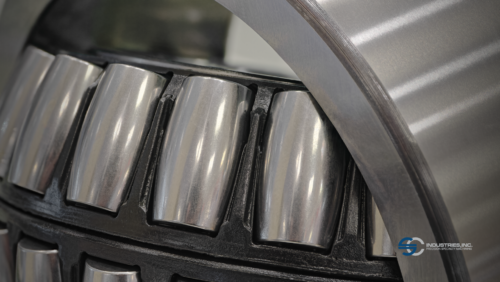
How to Select and Specify a Thrust Bearing
Comments Off on How to Select and Specify a Thrust BearingKey takeaways: Thrust bearing selection hinges on matching three critical variables – axial load, application environment, and tolerance – to your assembly’s specific demands. This is not a catalog lookup; it is an engineering decision that directly controls wear life, stability, and failure risk. This guide walks through the criteria that drive that decision, and […]
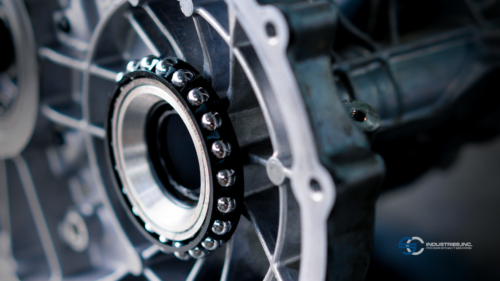
How Custom Thrust Bearings Are Manufactured
Comments Off on How Custom Thrust Bearings Are ManufacturedKey takeaways: Axial loads in heavy-duty machinery demand precision that catalog parts cannot guarantee. A custom thrust bearing is engineered to a specific application’s load, speed, and envelope, then machined, ground, and hardened to match – a process fundamentally different from pulling a generic component off a shelf. This behind-the-scenes look complements the broader guidance […]
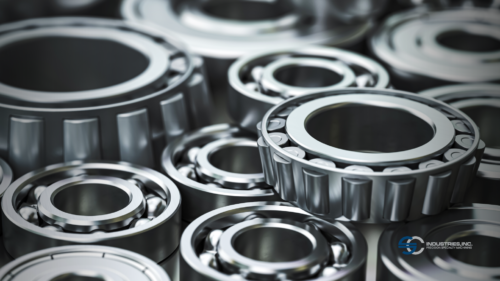
Industrial Thrust Bearings
Comments Off on Industrial Thrust BearingsKey takeaways: Industrial thrust bearings occupy a narrow but unforgiving corner of rotating machinery: they absorb the axial forces that press along a shaft’s centerline, loads that would rapidly wreck a bearing engineered only for radial duty. Whether the load rides on a hydrodynamic oil film, a set of rolling elements, or a precision-ground plain […]

What is Through-Feed Grinding?
Comments Off on What is Through-Feed Grinding?Through-feed grinding is a specialized machining technique used primarily in the manufacturing of precision cylindrical components. This method allows for the efficient processing of long, cylindrical parts, enhancing productivity while ensuring tight tolerances and superior surface finishes. In this article, we will delve into the intricacies of through-feed grinding, its applications, and its significance in […]

What is the difference between plunge cut grinding and through-feed grinding?
Comments Off on What is the difference between plunge cut grinding and through-feed grinding?In the precision machining industry, understanding the nuances of various grinding technique options is essential for optimizing production processes. Two prominent methods, plunge cut grinding (also known as in-feed grinding), and through-feed grinding, serve distinct purposes and applications. This article delves into the differences between these two grinding techniques, exploring their methodologies, advantages, and ideal […]

What are the advantages of centerless grinding over centre type grinding?
Comments Off on What are the advantages of centerless grinding over centre type grinding?In the precision machining sector, the choice of grinding method can meaningfully impact production efficiency and part quality. Among the various techniques available, centerless grinding has emerged as a preferred option for many manufacturers. Understanding the advantages of centerless grinding over traditional center-type grinding can help decision-makers select the most suitable approach for their specific […]

What is the difference between infeed and through-feed grinding?
Comments Off on What is the difference between infeed and through-feed grinding?In precision machining, understanding grinding techniques is essential for optimizing manufacturing processes and achieving superior component quality. Infeed and through-feed grinding are two fundamental centerless grinding methods, each suited to specific part geometries and production requirements. This high-productivity finishing technology generates precision parts by supporting the workpiece without fixed clamping points, drastically reducing production time […]