


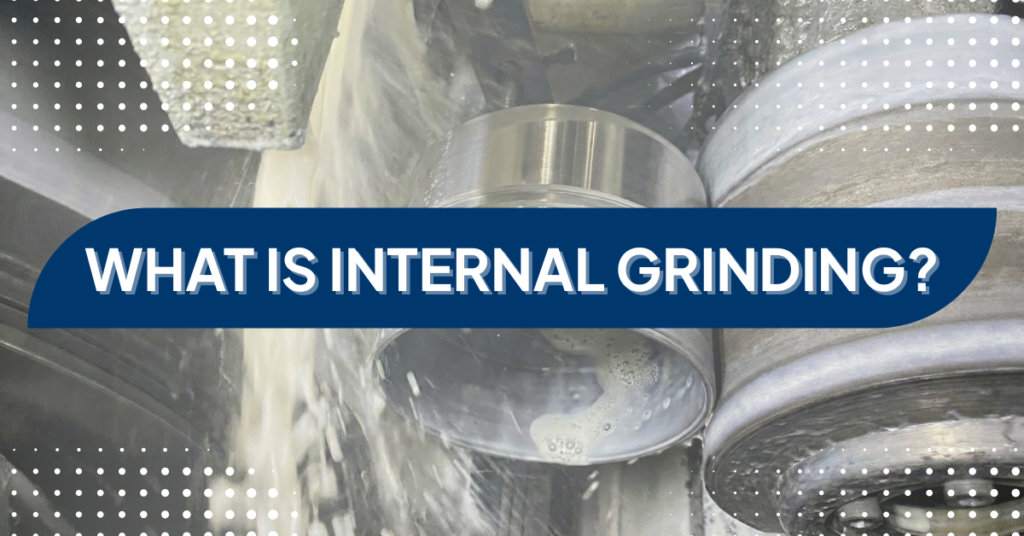
Internal grinding is a critical machining operation used to finish the internal surface, or bore, of a cylindrical workpiece. This precision process achieves the highly accurate internal diameters typically necessary for components requiring tight dimensional control, such as bearing raceways and rings. To achieve this precision, especially in demanding applications, specialized techniques like Internal Centerless grinding are used, adapting the core principles of Centerless Grinding to inner diameters.
The following sections examine the fundamentals of grinding, the specialized nature of internal grinding, and the key components required for this process.
What is meant by grinding?
Grinding is recognized as a high-precision, highly efficient machining process for removing material from workpieces. An abrasive process, it uses a rotating wheel to achieve the remarkably tight tolerances and smooth surface finishes that are essential across modern industry. The evolution of grinding techniques, including centerless methods, made possible not only mass production but also the manufacture of interchangeable spare parts.
What is internal grinding?
Internal grinding is a precision operation executed specifically to refine the bore of a component, ensuring the internal diameter is perfectly cylindrical. This process is essential for finishing features like bearing raceways, where parts demand high precision, sometimes reaching micrometer order grinding accuracy. Two common specialized methods utilized for grinding internal surfaces of rings are the 2-shoe type and the 3-roll type centerless configurations.
What is external grinding?
External grinding is the centerless grinding method’s principle configuration, focusing on finishing the outer cylindrical surface of a workpiece. Unlike chucking methods, external centerless grinding supports the workpiece on a work blade between the grinding wheel and a regulating wheel. This setup eliminates the need for chucking and rotational driving of the workpiece, greatly improving productivity and accuracy.
What wheel should be selected for grinding cemented carbide?
When grinding hard materials such as cemented carbide, specialized abrasive wheels capable of withstanding the material’s hardness are required. For instance, in an experimental in-feed centerless setup involving K-grade cemented carbide (TH10) workpieces, a metal-bonded diamond wheel can be utilized. The use of such a wheel ensures the grinding process maintains stability and efficiency when machining exceptionally hard components.
What is the process of internal grinding wheel?
The process of maintaining the precision and integrity of the internal grinding wheel typically involves specialized preparation steps like high-precision truing and dressing. The process of internal grinding wheel maintenance is crucial; rotary dressing systems are employed to minimize the runout of the wheels. The internal grinding machine must accommodate this specialized wheel setup to successfully machine inner diameters.
Internal Grinding Attachment: Features and Benefits
The primary feature of a specialized Internal Grinding Attachment is the unique support mechanism it employs to hold and drive the hollow workpiece. These machines often eliminate the need for chucking and centering the part, enabling very fast loading and unloading operations critical for high production volumes. Components like shoe-type support systems are frequently employed for both external or internal grinding of rings.
Internal grinding, particularly when utilizing centerless methods, is indispensable for manufacturing precision components in high-volume industries like automotive and bearings. This method achieves exceptional roundness and surface quality by adapting specialized support systems for inner diameters.
We invite you to leverage our expertise and advanced machinery for your most demanding precision component needs. Call 216-732-9000 or Request a Quote with SC Industries today.