


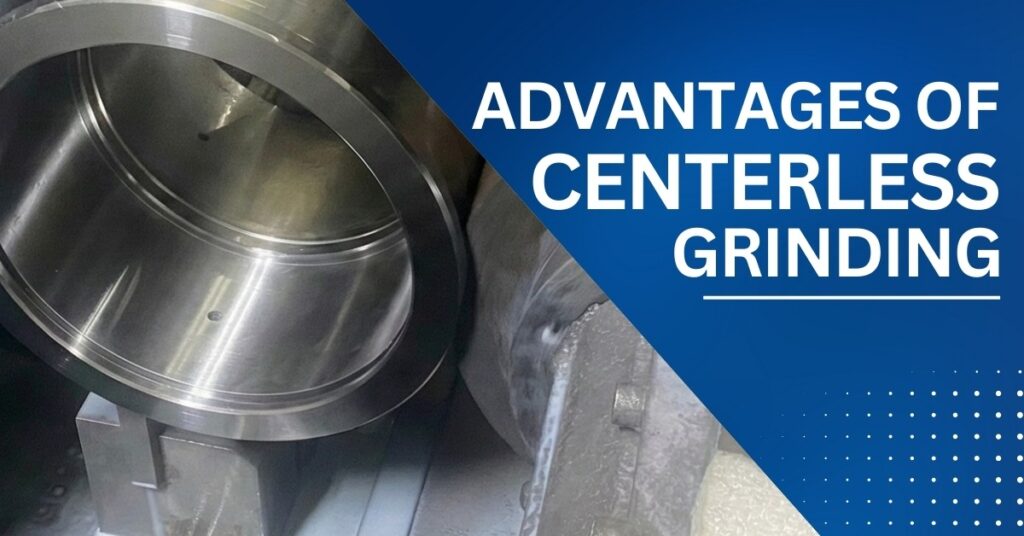
Centerless grinding is an innovative machining process that enhances efficiency and precision in manufacturing. This article delves into the advantages of centerless grinding, exploring its fundamental principles, applications, and benefits. By understanding the intricacies of this process, manufacturers can optimize their production capabilities and achieve superior results.
What is Centerless Grinding?
Centerless grinding is a method of grinding cylindrical parts without the need for a fixed center. The process involves placing the workpiece between two grinding wheels: a grinding wheel and a regulating wheel. The grinding wheel removes material, while the regulating wheel controls the rotation and linear movement of the workpiece.
Key components involved in the process include:
- Grinding Wheel: The primary tool that removes material from the workpiece.
- Regulating Wheel: Controls the speed and feed of the workpiece.
- Work Rest Blade: Supports the workpiece during grinding.
Understanding what is the centerless grinding process allows manufacturers to leverage its unique advantages effectively. This method is particularly beneficial for producing precision hardened metal bushings and components, where tight tolerances are critical.
What are the Basics of Centerless Grinding?
The fundamental principles of centerless grinding revolve around the ability to grind parts without the need for a central fixture, allowing for continuous production. The primary types of centerless grinding methods are:
- Through-feed grinding: Suitable for cylindrical parts that are fed through the machine.
- In-feed grinding: Used for parts that require a more complex profile.
- End-feed grinding: Produces tapered parts by carefully controlling the extent of the grinding process. It’s similar to through-feed grinding in that the workpiece is fed into the centerless grinding machine against the regulating wheel and grinding wheel, but the part is stopped before it can fully go through the machine.
While there are numerous advantages and disadvantages of centerless grinding, the benefits often outweigh the drawbacks, particularly in high-volume applications. The ability to achieve extremely tight tolerances as low as ±0.0004″ or ±0.0005″, and micro-finishes down to 8-16 micro is a significant advantage in industries that demand high precision.
What Does a Centerless Grinder Do?
A centerless grinder functions by maintaining the workpiece’s position as it rotates between the grinding and regulating wheels. This method differs from traditional grinding methods, where the workpiece is held in a fixed position.
Applications of a centerless grinder include:
- Grinding of shafts and pins
- Production of bushings and bearings
- Finishing of cylindrical components
The versatility of centerless grinding makes it a preferred choice for many manufacturers, including centerless grinding wheel manufacturers. Additionally, SC Industries, Inc. leverages its 75+ years of experience in producing precision components to ensure that the centerless grinding process is optimized for durability and performance.
The integration of multi-axis CNC technology enhances the capabilities of centerless grinding, allowing for complex geometries and configurations. This is particularly advantageous for specialized applications such as oil-grooving with custom configurations, which can be seamlessly incorporated into the grinding process.
Moreover, the ISO 9001:2015-certified quality system at SC Industries, Inc. ensures that all centerless grinding operations adhere to stringent quality controls, resulting in a low defect rate. This commitment to quality is further supported by comprehensive inspection protocols. Every component undergoes rigorous metrology and inspection processes, ensuring they meet the exacting standards required by OEMs and heavy-duty industrial applications.
The ability to produce hardened and ground bushings and bearings with precision heat treating and induction hardening processes further enhances the performance characteristics of components manufactured through centerless grinding. These processes ensure that the final products can withstand high loads, friction, and wear, making them ideal for demanding environments.
In summary, the advantages of centerless grinding extend beyond mere efficiency. By integrating advanced technologies and adhering to strict quality standards, manufacturers can achieve superior results that align with the needs of heavy-duty industries. The combination of multi-axis CNC, specialized grinding techniques, and a commitment to quality positions SC Industries, Inc. as a leader in the production of precision components.
What is the Advantage of Centerless Grinding?
Centerless grinding offers several key advantages that make it a preferred choice in precision manufacturing:
- Increased Efficiency: The continuous “through-feed” process allows for rapid part processing without the need for manual loading or centering, significantly reducing cycle times. When selecting equipment, understanding the centerless grinding wheel price and overall cost of operation is essential for optimizing your manufacturing budget.
- Enhanced Precision: Centerless grinding achieves tight tolerances, often as low as ±0.0004″ or ±0.0005″, ensuring high-quality output.
- Improved Surface Finish: The process can achieve smoother surface finishes, enhancing the overall quality of the components. These benefits make centerless grinding a powerful tool in precision manufacturing.
What is the Advantage of Using a Centerless Grinding Machine for High Volume Production?
Centerless grinding machines are particularly advantageous for high-volume production due to their efficiency and cost-effectiveness:
- Improved Production Rates: The continuous nature of the process allows for faster throughput compared to traditional methods.
- Cost-Effectiveness: Reduced setup times and increased automation lead to lower operational costs in high-volume scenarios.
The in-feed grinding process can be tailored to accommodate various part sizes and shapes, further enhancing production efficiency. With over 75 years of experience in producing precision hardened metal components, SC Industries, Inc. leverages advanced multi-axis CNC capabilities to optimize production processes, ensuring that components meet stringent specifications consistently.
Can You Centerless Grind a Taper?
Yes, it is feasible to centerless grind a taper, although specific adjustments are required. Taper grinding using centerless methods involves:
- Adjust the height of the work rest blade to achieve the desired taper angle.
- Modifying the position of the regulating wheel to control the feed rate effectively.
These adjustments ensure that the taper is ground accurately while maintaining the benefits of centerless grinding. Utilizing our precision heat treat processes in conjunction with taper grinding can enhance the durability of the components, ensuring they withstand the rigors of heavy-duty applications.
What are the Parameters of Centerless Grinding?
Key parameters that affect centerless grinding performance include:
- Center Height: The optimal height of the workpiece relative to the grinding wheels.
- Wheel Speed: The rotation speed of the grinding wheel, impacting material removal rates.
- Grit Size: The size of the abrasive particles on the grinding wheel influences the surface finish.
Optimizing these parameters is crucial for achieving the best results in centerless grinding. For example, using a centerless grinding center height formula helps determine the ideal setup for specific applications. Additionally, a grinding wheel grit size chart assists in selecting the appropriate wheel for the desired finish.
SC Industries, Inc. employs comprehensive inspection equipment to monitor these parameters, ensuring compliance with our ISO 9001:2015-certified quality system, which boasts low defect rates and rigorous metrology controls.
Surface Grinding Speeds and Feeds
The relationship between surface grinding speeds and feeds is critical in optimizing the grinding process:
- Speeds: Higher speeds can enhance material removal rates but may lead to increased wear on the grinding wheel.
- Feeds: The feed rate must be balanced to ensure effective material removal without compromising surface quality.
Understanding these factors is essential for maximizing the efficiency of the grinding operation. Our in-house capabilities for centerless and internal grinding allow us to fine-tune these variables, ensuring our components not only meet but exceed industry standards.
Conclusion
Centerless grinding is an invaluable technique in the realm of precision manufacturing; especially for high-volume production. The advantages of increased efficiency, enhanced precision, and improved surface finish make it a preferred choice for OEMs and industrial heavy-equipment manufacturers. By leveraging over 75 years of experience, a certified quality system, and advanced manufacturing capabilities, SC Industries, Inc. stands ready to meet the exacting demands of the market.
For detailed insights into optimizing your centerless grinding processes, visit SC Industries, Inc. at scindustries.com. Explore our technical resources and discover how our expertise can enhance your manufacturing operations.