


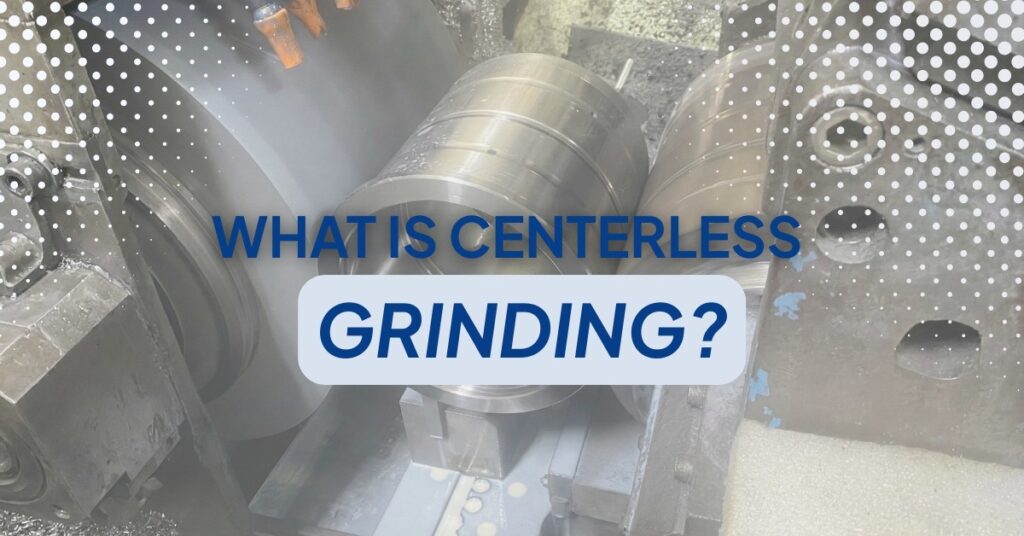
Centerless grinding is a precision machining process that has gained significant traction in various industries due to its efficiency and versatility. Understanding this method is essential for businesses looking to improve precision, throughput, and overall manufacturing efficiency.
In this article, we will explore what centerless grinding is; its basic principles, applications, and more, providing a comprehensive overview for decision-makers in the field.
What is Meant by Centerless Grinding?
Centerless grinding is a machining process involving the removal of material from a workpiece without the need for a spindle or fixture. Instead, the workpiece is supported by a regulating and a grinding wheel, allowing for continuous grinding without the need for centering the workpiece.
So to answer the question: what is centerless grinding?, in sum, it is a method that enables high-precision machining while meaningfully reducing setup time and increasing throughput.
Differences Between Centerless and Traditional Grinding Methods
- Setup: Traditional grinding methods typically require the workpiece to be centered and held in place, while centerless grinding allows for faster setup and operation.
- Efficiency: Centerless grinding can process multiple parts simultaneously, increasing productivity compared to traditional methods.
- Versatility: Centerless grinding accommodates a wide range of materials and geometries, making it ideal for various applications.
Applications of Centerless Grinding
Centerless grinding is widely used in industries such as:
- Automotive: For manufacturing precision components like shafts and bearings.
- Aerospace: In the production of critical parts that require high tolerances.
- Medical: For creating surgical instruments and implants.
- Manufacturing: In the production of fasteners and fittings.
Knowledge of what is centerless grinding used for helps businesses leverage this technology to enhance their production processes.
How to Run a Centerless Grinder?
Operating a centerless grinder requires precision and attention to detail. Here’s a step-by-step guide:
- Setup: Ensure the machine is clean and properly calibrated.
- Load the workpiece: Place the workpiece between the grinding wheel and the regulating wheel.
- Adjust the wheels: Set the distance between the wheels according to the specifications of the workpiece.
- Start the machine: Engage the machine and monitor the grinding process.
- Inspect the output: Regularly check the dimensions and surface finish of the workpiece.
Safety Precautions and Best Practices
- Always wear appropriate personal protective equipment (PPE).
- Ensure all guards are in place before operating the machine.
- Regularly inspect the grinding wheels for wear or damage.
- Implement a routine maintenance schedule to enhance machine longevity and performance.
Common Mistakes to Avoid
- Neglecting machine maintenance can lead to subpar performance.
- Failing to calibrate the wheels properly may result in inaccurate grinding.
- Overlooking the importance of proper coolant usage can lead to overheating and affect the quality of the grind.
What are the Parameters of the Grinding Process?
The efficiency of the grinding process is influenced by several key parameters:
- Wheel Speed: Higher speeds can improve material removal rates but may also lead to overheating.
- Feed Rate: The rate at which the workpiece is fed into the grinding wheel affects surface finish and dimensional accuracy.
- Workpiece Material: Different materials require specific wheel types and grinding techniques for optimal results.
- Coolant Application: Proper coolant type, flow, and direction reduce heat generation, improve surface finish, and extend wheel life.
What is the Most Commonly Used Grinding Wheel?
In centerless grinding, various grinding wheels can be utilized, including:
- Aluminum Oxide: Commonly used for general-purpose grinding.
- Silicon Carbide: Ideal for hard materials and achieving fine finishes.
- Cubic Boron Nitride (CBN): Often used for high-speed applications and hard materials, providing superior wear resistance.
Impact of Grinding Wheel Choice
The choice of grinding wheel affects:
- Material Removal Rate: Different wheels can optimize efficiency based on the material being processed.
- Surface Finish: The right wheel contributes to achieving the desired finish on the workpiece.
- Cost Efficiency: Selecting the appropriate wheel can lead to reduced operational costs by minimizing wear and tear on equipment.
A full understanding of what is a centerless grinding wheel helps in selecting the appropriate wheel for specific applications.
Centerless Grinding Service Cost
Centerless grinding service cost can vary based on several factors:
- Complexity of the workpiece: More intricate designs may incur higher costs.
- Material type: Hard or heat-sensitive materials may require specialized wheels, fixtures, or coolant systems, which can increase cost.
- Volume of work: Larger orders often result in lower per-unit costs.
- Precision requirements: Higher-precision demands can lead to increased costs due to the need for advanced machinery and skilled operators.
Tips for Getting Quotes and Evaluating Service Providers
- Request detailed quotes that logically break down costs.
- Compare service providers based on experience and customer reviews.
- Consider the provider’s ability to meet tight tolerances and deadlines.
- Inquire about their quality control measures to ensure consistent output.
Conclusion
Understanding what is centerless grinding is essential for businesses aiming to improve their manufacturing processes. With its unique advantages and applications across various industries, centerless grinding presents a valuable solution for precision machining needs.
Ready to dive deeper into the sector of centerless grinding? Contact us today for expert insights, tips, and the latest industry trends that can elevate your machining processes. Join our community and stay ahead of the curve!