


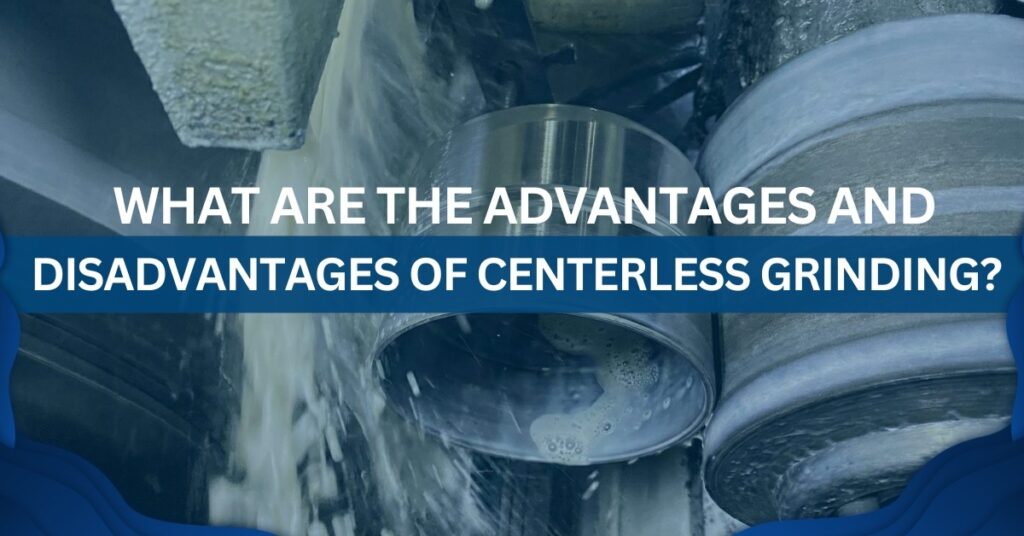
Centerless grinding is a pivotal process in precision machining, offering numerous benefits to enhance manufacturing efficiency and product quality. As industries increasingly demand tighter tolerances and superior surface finishes, understanding the advantages of centerless grinding becomes essential.
This article provides a direct comparison of centerless grinding with centered grinding, outlines typical setups, and explores the specific advantages these grinding machines bring to the manufacturing landscape.
What is the purpose of centerless grinding?
The primary purpose of centerless grinding is to achieve high precision in the machining of cylindrical components without the need for a fixed center point. This method is particularly advantageous for producing parts that require tight tolerances and excellent surface finishes. Centerless grinding allows for the continuous production of components, significantly increasing efficiency in the manufacturing process.
In essence, the role of a centerless grinding service is to streamline the machining process, enabling manufacturers to produce large volumes of high-quality components with minimal downtime. This is especially critical in industries where precision and efficiency are non-negotiable.
With over 75 years of experience in producing precision hardened metal components, SC Industries Inc. leverages its expertise to ensure that every component meets stringent specifications.
What is the difference between centerless grinding and centered grinding?
The distinction between centerless grinding and centered grinding lies primarily in their setup and operational methodologies.
- Setup:
- Centerless Grinding: Components are positioned between a grinding wheel and a regulating wheel, allowing for free movement without the need for a fixed center.
- Centered Grinding: Components are held in place by centers, requiring precise alignment and setup.
- Operation:
- Centerless Grinding: Facilitates continuous production, where multiple parts can be ground in succession without stopping the machine.
- Centered Grinding: Generally involves more manual intervention and can lead to longer cycle times.
Advantages and Disadvantages
Centerless Grinding Advantages:
- Higher production rates
- Reduced setup time
- Capability to grind complex shapes
- Extremely tight tolerances as low as ±0.0004″ or ±0.0005″, ensuring high-quality output.
Disadvantages of Centerless Grinding:
- Limited to cylindrical shapes
- Requires precise adjustments for different part sizes
Understanding these differences helps manufacturers select the appropriate grinding method based on their specific requirements.
What is the typical setup for centerless grinding?
A standard centerless grinding grinder setup comprises several key components that work in unison to achieve optimal grinding results:
- Grinding Wheel: The primary tool that removes material from the workpiece.
- Regulating Wheel: Controls the speed at which the workpiece is fed into the grinding wheel.
- Work Rest Blade: Supports the workpiece during grinding.
- Adjustable Fixtures: Allow for precise alignment and positioning.
The importance of alignment and positioning cannot be overstated; even minor misalignments can lead to significant deviations in tolerance and surface finish. Proper setup ensures the grinding process remains stable and efficient, contributing to the overall quality of the finished product. SC Industries Inc. employs a certified quality system: ISO 9001:2015, to maintain low defect rates, further enhancing the reliability of its centerless grinding operations.
What are the advantages of grinding machines?
The benefits of using grinding machines, particularly in the context of centerless grinding, are numerous and impactful:
- Increased Efficiency: Centerless grinding machines facilitate faster production cycles, enabling manufacturers to meet high demand without sacrificing quality.
- Precision: The ability to achieve tolerances as tight as ±0.0004″ or ±0.0005″ ensures that components meet stringent specifications. Centerless grinding can achieve tolerances as tight as ±0.0001 inches (±0.0025 mm), which is crucial for automotive components where exact measurements are essential for performance and reliability.
- Enhanced Surface Finishes: Centerless grinding can produce micro-finishes enhancing the performance and longevity of components. The process can produce surface finishes of up to 0.1 microns. This makes it an ideal process for creating smooth, polished surfaces that are free from scratches, burrs, and other imperfections.
- Specialized Oil-Grooving: The capability to incorporate custom oil-grooving configurations allows for improved lubrication and performance in high-load applications.
Additionally, the integration of internal cylindrical grinding techniques within centerless setups allows for even greater versatility, enabling manufacturers to produce a wider range of component geometries and sizes.
The advantages of centerless grinding machines are manifold, making them an essential tool in the arsenal of precision machining. As industries continue to evolve, the demand for efficient, high-precision manufacturing processes will only grow, positioning centerless grinding as a key player in meeting these challenges.
Ready to leverage the precision of centerless grinding for your components? Contact our expert team to schedule a consultation. With ISO 9001:2015 certification and proven expertise in precision machining, SC Industries, Inc. is your trusted partner for high-quality components. Reach out now and let’s discuss your project!